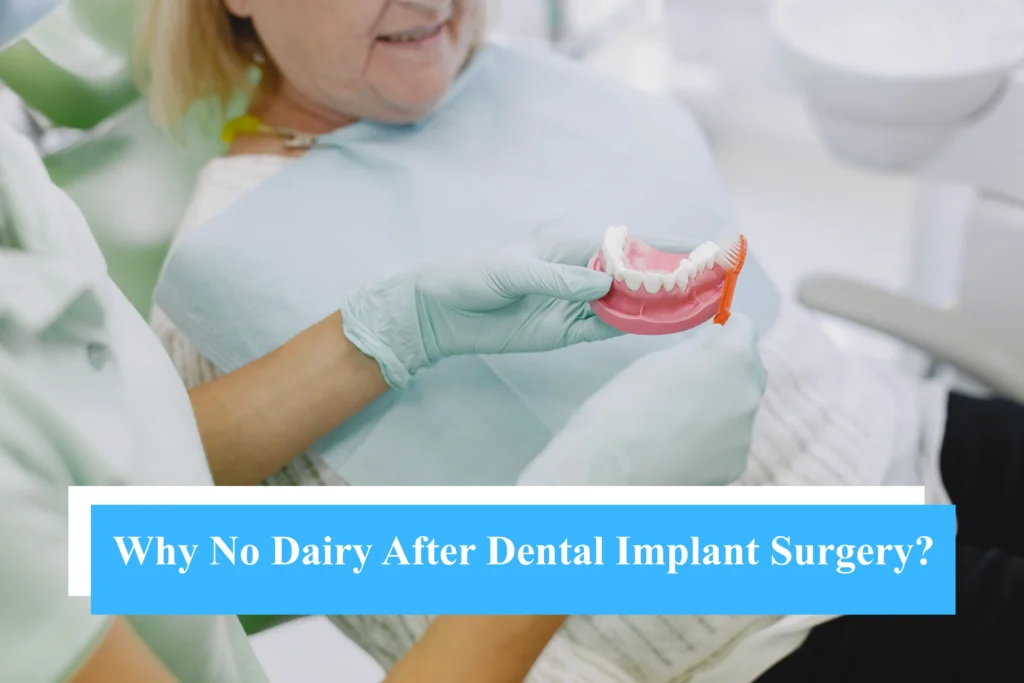
There is no universal rule stating that every dental implant patient must avoid all dairy products. In fact, soft dairy foods such as plain yogurt, milk, cottage cheese, and smooth dairy-based foods may be included in post-operative diets by some clinicians.
A dentist may recommend temporary dairy avoidance because of a particular medication, nausea, food-safety concern, individual sensitivity, or office-specific protocol. The most important rule is to follow the instructions given by your own implant surgeon, since they know the details of your procedure and medical history.
Table of Contents
ToggleIs Dairy Always Prohibited After an Implant?
No. Dairy is not automatically harmful to a dental implant.
Some dairy foods are:
- Soft
- Easy to swallow
- High in protein
- Rich in calories
- A source of calcium
- Convenient when chewing is uncomfortable
For many patients, smooth yogurt or milk may be easier to consume than hard, crunchy, spicy, or acidic foods.
However, not every dairy product is suitable immediately after surgery. Hard cheese, sticky foods, very cold foods, sweetened yogurt, or dairy products containing seeds and crunchy pieces may irritate the surgical area or require excessive chewing.
Why Might a Dentist Say No Dairy?
1. Possible Medication Instructions
Some medications have food-related instructions.
Certain antibiotics, supplements, or other drugs may interact with calcium-containing products or may need to be taken separately from dairy. This does not apply to every antibiotic used in dentistry.
For example, a dentist may tell you to separate a medication dose from milk, yogurt, calcium supplements, or antacids. The reason is related to medication absorption rather than the implant itself.
Always read the pharmacy label and ask the pharmacist:
- Can I take this medicine with milk?
- Should I separate it from calcium?
- Should it be taken with food?
- What should I do if it causes nausea?
Do not stop an antibiotic or alter the schedule without professional advice.
2. Nausea After Sedation or Anesthesia
Sedation, swallowed blood, pain medication, or anesthesia can cause temporary nausea.
Rich dairy foods may feel heavy for some patients during the first few hours. A clinician may recommend beginning with:
- Water
- Clear fluids
- Mild soup
- Soft bland foods
Once nausea improves, other soft foods may be introduced according to instructions.
3. Avoiding Vomiting
Vomiting can increase discomfort and pressure in the mouth. It can also disturb the surgical site.
If a patient is prone to nausea, the provider may advise avoiding rich, creamy, or heavy foods temporarily.
This is an individual tolerance issue rather than evidence that dairy prevents implant healing.
4. Food-Safety Concerns
Unpasteurized milk, cheese, or yogurt may contain harmful microorganisms. After surgery, the goal is to minimize infection risk.
Patients should generally choose pasteurized dairy products and follow safe refrigeration practices.
Avoid:
- Unpasteurized milk
- Unpasteurized soft cheese
- Expired yogurt
- Dairy left unrefrigerated
- Foods with questionable storage
5. Dairy Products May Contain Too Much Sugar
Flavored milk, ice cream, milkshakes, sweetened yogurt, and dairy desserts may contain high amounts of added sugar.
Frequent sugar exposure supports harmful oral bacteria and can make oral hygiene more difficult.
This does not mean all dairy is unsuitable. Plain, low-sugar options may be preferable.
6. Texture Matters More Than the Dairy Ingredient
Some dairy foods are not appropriate because of texture.
Examples include:
- Hard cheese
- Crunchy frozen desserts
- Yogurt with granola
- Yogurt with seeds
- Sticky melted cheese
- Foods containing nuts
- Thick foods that require strong suction
After implant surgery, chewing pressure should be minimized near the surgical site.
7. Office-Specific Post-Operative Protocols
Dental practices sometimes use different recovery protocols based on training, experience, surgical technique, graft materials, and patient population.
Your dentist may have a specific reason for recommending temporary avoidance. Ask how long the restriction applies and whether it includes all dairy products.
Does Dairy Cause Dental Implant Infection?
Pasteurized dairy products do not inherently cause implant infections.
Post-surgical infection is more closely associated with factors such as:
- Bacterial contamination
- Poor oral hygiene
- Smoking
- Uncontrolled diabetes
- Disturbing the surgical site
- Failure to follow medication instructions
- Existing gum disease
- Complex grafting procedures
Claims that dairy automatically “creates bacteria” around an implant oversimplify how infections develop.
All foods can leave residue in the mouth. Gentle cleaning and following post-operative hygiene instructions are more important than avoiding an entire food group without a clinical reason.
Does Dairy Interfere With Blood Clotting?
Normal dairy intake is not generally known to dislodge a surgical blood clot.
The actions more likely to disturb healing include:
- Forceful rinsing
- Spitting
- Drinking through a straw
- Smoking
- Touching the site
- Vigorous exercise too soon
- Chewing directly on the wound
Your clinician may provide different instructions if you had a tooth extraction, bone graft, sinus lift, or extensive surgery at the same appointment.
Can You Drink Milk After a Dental Implant?
Many patients can drink milk after implant surgery unless their dentist, surgeon, physician, or pharmacist has instructed otherwise.
Consider the following:
- Use pasteurized milk
- Avoid very hot milk
- Do not drink through a straw
- Choose lower-sugar options
- Rinse or clean your mouth as instructed
- Separate milk from medications when required
If you feel nauseated, begin with clear fluids and gradually reintroduce other foods.
Can You Eat Yogurt After Implant Surgery?
Smooth yogurt is commonly considered a convenient soft food.
Choose yogurt that is:
- Pasteurized
- Smooth
- Low in added sugar
- Free from granola
- Free from nuts
- Free from hard fruit pieces
- Not excessively cold if sensitivity is present
Avoid placing food directly against the surgical site when possible.
Is Ice Cream Safe After Dental Implant Surgery?
Ice cream is soft and cold, which may feel soothing. However, it can also be high in sugar and may contain hard pieces.
Avoid ice cream containing:
- Nuts
- Candy
- Cookie pieces
- Hard chocolate
- Seeds
- Sticky caramel
A small amount of smooth ice cream may be acceptable for some patients, but it should not become the main recovery food.
Can You Eat Cheese After Dental Implant Surgery?
Soft cheese may be easier to eat than hard cheese.
Potential options include:
- Cottage cheese
- Ricotta
- Soft cream cheese
- Finely mashed soft cheese dishes
Avoid tough, chewy, sticky, or hard cheese during the early recovery period.
Do not chew directly over the implant site.
What Should You Eat After Dental Implant Surgery?
During the First Day
Suitable foods may include:
- Smooth soup that is not hot
- Applesauce
- Mashed banana
- Smooth yogurt, when allowed
- Pudding
- Mashed avocado
- Protein drinks without seeds
- Soft scrambled eggs
- Pureed vegetables
- Mashed potatoes
Drink water regularly, but do not use a straw.
During the Next Few Days
As comfort improves, you may introduce:
- Soft pasta
- Well-cooked rice
- Flaky fish
- Soft tofu
- Oatmeal
- Soft cooked vegetables
- Cottage cheese
- Lentils
- Ground meat in sauce
- Soft pancakes
- Hummus
Chew on the opposite side when appropriate.
Later Recovery
Gradually return to a normal diet according to your dentist’s instructions.
More complex procedures, such as bone grafting, multiple implants, or full-arch surgery, may require a soft diet for a longer period.
Foods to Avoid After Implant Surgery
Common foods and habits to avoid include:
- Hard foods
- Crunchy foods
- Sticky foods
- Spicy foods
- Very acidic foods
- Very hot foods and beverages
- Nuts and seeds
- Popcorn
- Chips
- Crusty bread
- Hard candy
- Alcohol
- Smoking and vaping
- Drinking through a straw
The restriction period depends on the procedure.
Why Protein Matters During Healing
Protein supports tissue repair and recovery.
Soft protein sources may include:
- Eggs
- Smooth yogurt
- Milk
- Cottage cheese
- Soft fish
- Tofu
- Blended beans
- Lentils
- Protein shakes
- Pureed chicken or meat
Patients avoiding dairy can use suitable dairy-free alternatives, but should check the protein and sugar content.
What About Dairy After a Bone Graft?
Bone grafting may require a longer or stricter soft-food period, but dairy is not universally prohibited.
Your surgeon may recommend avoiding certain foods because they:
- Require chewing
- Contain small particles
- Are sticky
- May enter the surgical area
- Interfere with prescribed medication
- Trigger nausea
Follow the individualized grafting instructions provided by your surgical team.
How Long Should You Avoid Dairy?
There is no standard dairy restriction period for every implant patient.
Depending on the reason, a provider may advise avoiding it for:
- A few hours
- The first day
- The duration of a particular medicine
- Several days after a complex procedure
Ask your dentist for a specific timeframe rather than assuming you must avoid dairy throughout the entire healing process.
Call Your Dentist if You Notice
Seek advice if you develop:
- Increasing swelling
- Fever
- Pus
- Severe pain
- A bad taste that does not improve
- Persistent vomiting
- Inability to drink fluids
- Heavy bleeding
- A loose implant component
- Difficulty swallowing or breathing
- Signs of medication allergy
Dietary changes cannot treat a surgical infection.
Frequently Asked Questions
Why do some dentists say no milk after dental implants?
The advice may relate to nausea, medication absorption, food safety, sugar content, or an individual post-operative protocol.
Does milk slow implant healing?
Milk is not generally known to slow normal implant healing. Follow your dentist’s advice if you have specific medical, surgical, or medication-related restrictions.
Can dairy cause infection after oral surgery?
Pasteurized dairy does not automatically cause infection. Poor oral hygiene, smoking, uncontrolled medical conditions, and contamination are more relevant risk factors.
Can I have a milkshake after implant surgery?
Possibly, but do not use a straw. Choose a smooth milkshake without seeds, nuts, candy, or hard pieces, and consider its sugar content.
Can I take antibiotics with dairy?
It depends on the antibiotic. Check the medication label and ask your pharmacist rather than applying one rule to every prescription.
Is yogurt good after dental implant surgery?
Smooth, pasteurized, low-sugar yogurt can be a useful soft food for many patients unless your clinician has advised against dairy.
Final Thoughts
So, why no dairy after dental implant surgery? The advice is usually based on medication instructions, nausea prevention, food safety, texture, sugar content, or a clinician’s individual protocol—not because dairy automatically damages an implant.
Many patients can safely consume soft, pasteurized dairy products after surgery. However, your surgeon’s instructions should take priority because recovery recommendations can differ based on the implant location, number of implants, bone grafting, medications, and your general health.