
For most properly selected patients, dental implants are considered a safe and effective tooth-replacement option. They have been used for decades and can provide stable, long-term function.
However, implant placement is still a surgical procedure. Infection, nerve injury, sinus complications, implant failure, and inflammation around the implant can occur. A thorough evaluation, careful surgical planning, good oral hygiene, and regular follow-up significantly influence safety and success.
Table of Contents
ToggleWhat Is a Dental Implant?
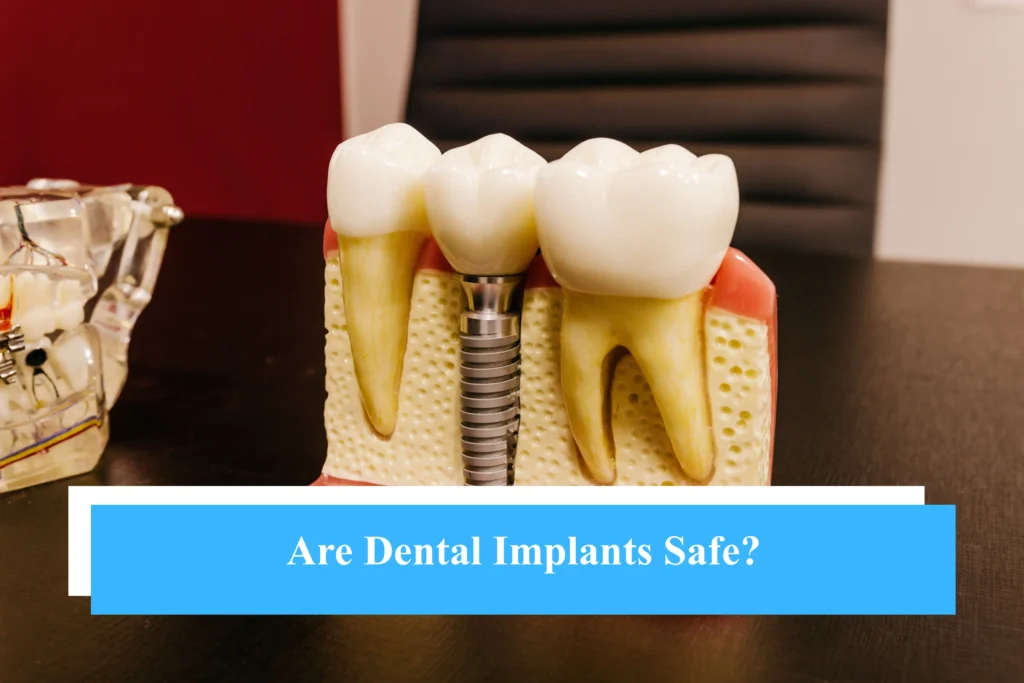
A dental implant is a small post, commonly made from titanium or a titanium alloy, placed into the jawbone to replace a missing tooth root.
An implant restoration usually has three components:
- Implant fixture: The part placed in the bone
- Abutment: The connector attached to the implant
- Crown, bridge, or denture: The visible tooth replacement
After placement, the surrounding bone gradually heals around the implant through a process called osseointegration.
Are Dental Implants Generally Safe?
Yes, dental implants are generally safe when:
- The patient is appropriately evaluated
- Surgery is performed by a trained clinician
- Sterile surgical protocols are followed
- Adequate bone and gum health are present
- Medical conditions are properly managed
- The patient follows post-operative instructions
- Long-term oral hygiene is maintained
No surgical treatment is completely risk-free. Your personal risk depends on your medical history, medications, tobacco use, gum condition, bone quality, bite forces, and surgical complexity.
Benefits of Dental Implants
Improved Stability
Implants are anchored in the jawbone and can provide stable support for chewing and speaking.
Natural Appearance
An implant crown can be shaped and colored to resemble nearby teeth.
No Need to Prepare Adjacent Teeth
A traditional bridge may require reshaping neighboring teeth. A single implant can often replace a tooth without using adjacent teeth as supports.
Support for Dentures
Two or more implants may help stabilize a loose removable denture.
Jawbone Support
After tooth loss, the jawbone in that area can gradually shrink. An implant may help maintain stimulation in the surrounding bone, although normal remodeling still occurs.
Long-Term Tooth Replacement
With appropriate maintenance, implants can function for many years. The implant fixture and the visible crown may have different lifespans, and the crown can require replacement due to wear or fracture.
What Are the Risks of Dental Implants?
1. Infection
An infection can develop during early healing or later around an integrated implant.
Signs may include:
- Increasing pain
- Swelling
- Pus or discharge
- Bad taste
- Fever
- Gum redness
- Implant movement
Early evaluation is important. Untreated infection can damage gum tissue and supporting bone.
2. Implant Failure
An implant may fail to integrate with the bone or may lose support later.
Possible contributing factors include:
- Infection
- Smoking
- Uncontrolled diabetes
- Poor bone quality
- Excessive bite pressure
- Teeth grinding
- Poor oral hygiene
- Premature loading
- Surgical overheating of bone
- Certain medications or medical conditions
Failure does not always mean that another implant can never be placed. After healing and correction of the cause, retreatment may be possible.
3. Nerve Injury
Implants placed in the lower jaw may be near nerves that supply sensation to the lip, chin, gums, and tongue.
Nerve irritation or injury can cause:
- Numbness
- Tingling
- Burning
- Altered sensation
- Pain
Three-dimensional imaging and accurate implant planning can help reduce this risk.
4. Sinus Complications
Upper back teeth may be close to the maxillary sinuses. An implant or bone-grafting procedure in this area can affect the sinus.
Possible complications include:
- Sinus membrane perforation
- Sinus inflammation
- Infection
- Implant migration
A sinus lift or bone augmentation may be recommended when available bone height is insufficient.
5. Damage to Nearby Structures
Improper implant positioning may affect adjacent teeth, roots, blood vessels, or surrounding bone.
Digital imaging, surgical guides, and detailed planning help the dentist choose the correct implant size and position.
6. Peri-Implant Disease
Implants cannot develop cavities, but the gum and bone around them can become inflamed.
Peri-implant mucositis affects the soft tissues and may be reversible with early treatment.
Peri-implantitis involves progressive bone loss around the implant and can threaten its stability.
Risk factors include:
- Plaque buildup
- Previous gum disease
- Smoking
- Poorly controlled diabetes
- Irregular dental care
- Difficult-to-clean restoration design
7. Mechanical Problems
Implant restorations can experience:
- Loose screws
- Chipped porcelain
- Worn crowns
- Fractured components
- Bite-related overload
- Denture attachment wear
Mechanical complications may be repairable without removing the implant.
Is Titanium Safe in Dental Implants?
Titanium is commonly used because it is strong, corrosion-resistant, and generally well tolerated by the body.
True titanium allergy appears uncommon, but patients with a history of metal reactions should discuss this with their dentist or medical specialist.
Some implant systems use zirconia as an alternative. Zirconia implants may suit selected cases, although they have different design and treatment limitations.
The material should be chosen based on clinical evidence, the patient’s anatomy, the clinician’s experience, and restorative requirements.
Who Is a Good Candidate for Dental Implants?
A suitable candidate generally has:
- One or more missing teeth
- Healthy or treatable gums
- Adequate jawbone or eligibility for grafting
- Good oral hygiene
- Realistic expectations
- A commitment to follow-up care
- Medical conditions that are stable or appropriately managed
Age alone does not determine candidacy. Both younger and older adults may receive implants, although implant placement is usually delayed until jaw growth is complete.
Who May Face Higher Implant Risks?
Risk may be increased by:
- Active gum disease
- Heavy smoking or vaping
- Poorly controlled diabetes
- Severe teeth grinding
- Significant immune suppression
- Certain bone disorders
- Inadequate jawbone
- Poor oral hygiene
- Previous radiation to the jaw
- Some antiresorptive or bone-modifying medications
- Inability to attend follow-up visits
Having a risk factor does not always rule out treatment. It may mean that additional evaluation, medical coordination, risk reduction, or an alternative treatment is needed.
Are Dental Implants Safe for People With Diabetes?
People with well-controlled diabetes may be able to receive dental implants successfully.
Poorly controlled diabetes can:
- Delay wound healing
- Increase infection risk
- Worsen gum disease
- Affect bone healing
Your implant dentist may request recent blood glucose information or coordinate with your physician before surgery.
Are Dental Implants Safe for Smokers?
Smoking is associated with poorer healing and a higher risk of implant complications and peri-implant disease.
Patients should discuss smoking cessation before surgery. Reducing or stopping tobacco use can support healing and improve long-term oral health.
Are Dental Implants Painful?
Implant placement is usually performed under local anesthesia, so patients should not feel sharp pain during the procedure.
After surgery, temporary symptoms may include:
- Soreness
- Swelling
- Minor bleeding
- Bruising
- Jaw stiffness
Pain should generally improve rather than worsen. Severe pain, increasing swelling, fever, persistent bleeding, or numbness should be reported promptly.
What Happens Before Implant Surgery?
A complete evaluation may include:
- Dental and medical history
- Medication review
- Gum examination
- Bite assessment
- Two-dimensional X-rays
- Three-dimensional CBCT imaging
- Bone measurement
- Evaluation of nearby nerves and sinuses
- Digital scans or impressions
- Discussion of alternatives
- Written treatment plan
Your dentist should explain the stages, healing time, costs, risks, expected outcome, and maintenance requirements.
How to Reduce Dental Implant Risks
Choose an Appropriately Trained Provider
Ask about the dentist’s implant education, experience, complication-management process, and the type of cases they routinely treat.
Complex cases may involve a periodontist, oral surgeon, prosthodontist, or a team of clinicians.
Provide a Complete Medical History
Tell the dentist about:
- Diabetes
- Heart conditions
- Bleeding disorders
- Immune conditions
- Previous radiation treatment
- Osteoporosis
- Allergies
- Pregnancy
- Tobacco use
- All medications and supplements
Do not stop prescription medication without consulting the prescribing clinician.
Treat Gum Disease First
Active periodontal infection should usually be controlled before implant placement.
Follow Post-Operative Instructions
Instructions may include:
- Taking prescribed medication correctly
- Using an antimicrobial rinse
- Eating soft foods
- Avoiding smoking
- Avoiding strenuous activity initially
- Keeping the surgical site clean
- Attending follow-up appointments
Maintain Excellent Oral Hygiene
Brush and clean around the implant every day. Your dentist may recommend floss, interdental brushes, water flossers, or implant-specific cleaning aids.
Control Grinding and Clenching
A protective nightguard may be recommended when excessive bite forces are present.
How Long Does Dental Implant Healing Take?
Healing time varies.
Factors include:
- Implant location
- Bone quality
- Need for bone grafting
- Number of implants
- Medical health
- Smoking status
- Whether the implant is immediately loaded
Osseointegration often requires several months. Some implants receive a temporary tooth quickly, while others remain unloaded during healing.
Immediate teeth do not mean immediate complete healing.
Warning Signs After Implant Surgery
Contact your dentist if you experience:
- Heavy or persistent bleeding
- Fever
- Worsening swelling after several days
- Pus or foul discharge
- Severe or increasing pain
- Persistent numbness
- Difficulty breathing or swallowing
- A loose implant
- A loose temporary tooth
- Gum recession around the implant
Early treatment can prevent a minor complication from becoming more serious.
Alternatives to Dental Implants
Implants are not the only option.
Alternatives include:
- Removable partial dentures
- Complete dentures
- Tooth-supported bridges
- Resin-bonded bridges
- Orthodontic space closure
- Leaving the space untreated in selected cases
The best option depends on dental health, cost, anatomy, preferences, and long-term goals.
Frequently Asked Questions
Can dental implants cause health problems?
Most patients do not develop systemic health problems from implants. Local complications such as infection, inflammation, nerve irritation, or implant failure can occur.
Can the body reject a dental implant?
Implant failure is not usually the same as organ rejection. An implant may fail to integrate because of infection, poor healing, insufficient stability, excessive force, or other factors.
Are dental implants safe for older adults?
They can be. Overall health, bone condition, medications, and ability to maintain oral hygiene are more important than age alone.
Can dental implants cause cancer?
Current clinical use does not establish dental implants as a cause of oral cancer. Any persistent ulcer, swelling, unexplained pain, or abnormal tissue around an implant should still be examined.
Are dental implants safe during pregnancy?
Elective implant surgery is commonly postponed until after pregnancy. Urgent dental care should be coordinated with the patient’s dentist and obstetric clinician.
How often should implants be checked?
The recommended schedule depends on the individual’s risk. Regular dental examinations and professional cleaning are essential.
Final Thoughts
So, are dental implants safe? For most appropriately selected patients, dental implants are a safe and effective way to replace missing teeth. Nevertheless, they require surgery, healing, ongoing hygiene, and professional maintenance.
Choosing a qualified provider, controlling gum disease and medical conditions, avoiding tobacco, and following post-operative instructions can significantly reduce risk. A personalized examination is necessary to determine whether implants are the safest and most appropriate option for you.