
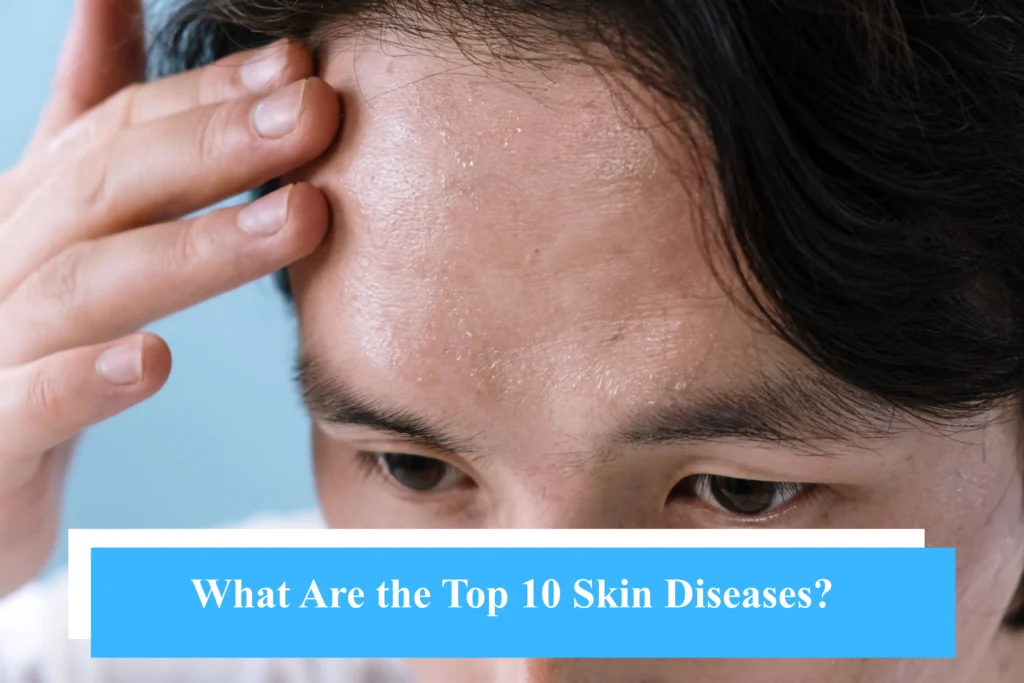
Recognizing typical features can help you describe symptoms to a clinician. It cannot confirm a diagnosis from an online description or photograph.
Table of Contents
Toggle1 Acne
Acne develops when hair follicles become blocked with oil and dead skin cells, with inflammation contributing to breakouts. It can cause blackheads, whiteheads, inflamed spots or deeper painful lesions, commonly on the face, chest and back.
Treatment depends on severity. Avoid picking spots, which can worsen scarring. Persistent, painful or scarring acne deserves medical assessment rather than increasingly harsh cleansing.
2 Atopic Eczema
Atopic eczema is an inflammatory condition associated with itchy, dry skin and recurring flares. The skin may become cracked, thickened or discolored. Its appearance varies with skin tone, and it is not contagious.
Moisturizing and reducing relevant triggers are important parts of care. A clinician may prescribe anti-inflammatory treatment. Pain, pus, rapid worsening or fever can indicate infection and require prompt review.
3 Contact Dermatitis
Contact dermatitis occurs when a substance irritates the skin or triggers an allergic reaction. Soap, detergents, metals and personal-care products can be relevant exposures. Symptoms may include itching, dryness, cracking or blistering.
Identifying and avoiding the trigger helps prevent recurrence. When allergic contact dermatitis is suspected, a clinician may consider patch testing. A product labeled “natural” can still irritate skin or cause an allergy.
4 Psoriasis
Psoriasis is an immune-mediated condition that can produce thickened, scaly patches. It may affect the scalp, elbows, knees, nails or other areas. It is not an infection and cannot be passed to someone through ordinary contact.
Treatment ranges from topical medicines to light therapy or systemic treatment, depending on severity. Report persistent joint pain or stiffness because some people also develop psoriatic arthritis.
5 Rosacea
Rosacea commonly affects the central face, causing persistent color changes, flushing, visible small vessels or acne-like bumps. Some people develop irritated eyes. Signs can be less visually obvious on darker skin.
Management may include identifying personal triggers, gentle skincare and prescribed treatment. Eye pain, marked light sensitivity or changes in vision need prompt assessment.
6 Seborrheic Dermatitis
Seborrheic dermatitis can cause scaling and inflammation on areas such as the scalp, eyebrows and sides of the nose. Dandruff is a common, milder scalp presentation. Flaking does not necessarily mean the skin simply needs more oil.
Treatment may include appropriate medicated shampoos or prescribed products. Persistent scaling outside the scalp, significant inflammation or symptoms that do not improve should be evaluated.
7 Hives
Hives, also called urticaria, cause raised itchy welts that can change shape and location. Triggers may include infections, medicines or allergic reactions, although a clear cause is not always found.
A pharmacist or clinician can advise on treatment. Hives with difficulty breathing, faintness or swelling of the tongue or throat require emergency care because they may be part of a severe allergic reaction.
8 Ringworm
Ringworm is a fungal infection, despite its name. It can cause an itchy, scaly rash, sometimes with a ring-shaped border. It may affect different body areas, including the scalp, and can spread between people or through contaminated items.
Antifungal treatment depends on the location and extent. Scalp infection often needs prescribed oral treatment. Do not assume a steroid cream is suitable for an undiagnosed ring-shaped rash.
9 Scabies
Scabies is caused by tiny mites and often produces intense itching, particularly at night. It spreads through close contact. Symptoms may appear around the fingers, wrists and other areas, although the pattern varies.
Treatment must address the infestation and relevant close contacts according to professional advice. Itching can persist after successful treatment, so follow-up should distinguish expected recovery from ongoing infestation.
10 Vitiligo
Vitiligo causes areas of skin to lose pigment. It is not contagious and is not caused by poor hygiene. The extent and pattern vary, and its emotional impact can be significant even when the skin is not painful.
Management may include sun protection, camouflage options and medical treatments selected by a dermatologist. A new pale patch should be assessed because not every loss of color is vitiligo.
When Should You Seek Medical Help for a Skin Problem?
Seek assessment for a persistent rash, unexplained pigment change, painful lesions or symptoms affecting sleep. Urgent help is appropriate for a rapidly spreading painful rash, fever, extensive blistering or breathing difficulty.
Skin cancer is not part of this particular list, but an evolving mole, a persistent bleeding lesion or a sore that does not heal also needs attention. Do not use a list of common conditions to dismiss an unusual change.
How Dermatologists Distinguish Similar Skin Conditions
A diagnosis usually combines the appearance of the skin with the symptom history and examination. The clinician may ask when the change started, whether it itches or hurts, what treatments you have used and whether anyone close to you has similar symptoms. Distribution across the body can be as important as the appearance of one patch.
Testing is selected when it can answer a useful question. A suspected infection may need a different investigation from a possible contact allergy or an unusual lesion. Not everyone with a rash needs blood tests or a biopsy, and not every diagnosis can be confirmed by a photograph alone.
Bring information about previous treatments, including over-the-counter creams. A rash that has been treated with several products may look different from its initial appearance. If you have photographs from earlier stages, they can help explain how it evolved.
Why Skin Tone Changes the Appearance of a Rash
Descriptions such as “red rash” can be too narrow. Inflammation may appear purple, grey, brown or less visibly obvious on deeper skin tones. Changes in texture, warmth, tenderness or swelling can be relevant even when bright redness is absent.
Pigment changes may also remain after the active problem improves. A flat dark mark left after inflammation is different from a raised scar or ongoing infection. Ask which part of the change the treatment is intended to address so you can judge progress accurately.
Use symptoms and the time course alongside color when describing the problem. For example, explain whether a patch is spreading, becoming painful or producing discharge. These details may be more useful than trying to match your skin exactly to an internet photograph.
Which Conditions Are Infectious and Which Are Not?
Ringworm and scabies need attention to transmission as well as individual treatment. Advice can involve close contacts or personal items, depending on the diagnosis. Follow instructions specific to the condition rather than adopting the same precautions for every rash.
Eczema, psoriasis and vitiligo are not contagious. Avoid isolating someone or suggesting that poor hygiene caused these conditions. Visible skin differences can already carry a social burden, and inaccurate assumptions make that burden worse.
The diagnosis matters before making decisions about household treatment. One person’s itching does not automatically mean everyone needs the same medicine. Equally, when contact management is recommended for a confirmed infection or infestation, treating only the most symptomatic person may be inadequate.
Can You Prevent Common Skin Diseases?
Prevention depends on the condition. Gentle skincare and appropriate sun protection support general skin health, but they do not guarantee that acne, psoriasis or vitiligo will never develop. Family history, immune processes and other factors may be relevant.
For contact dermatitis, identifying a personal exposure can make prevention more specific. Someone reacting to a workplace substance needs a different plan from someone using an irritating cosmetic. The practical goal is to reduce the relevant exposure without making unnecessary restrictions.
For an infectious condition, prevention may involve reducing spread and following treatment instructions. Avoid sharing treatment creams on the assumption that a similar-looking rash has the same cause. A correct diagnosis is the starting point for useful prevention advice.
Understanding Treatment Categories
Medicines Applied to the Skin
Topical treatments include different types of products with different purposes. A moisturizer supports dryness, an antifungal targets a fungal infection and an anti-inflammatory medicine may be used for selected inflammatory conditions. These are not interchangeable.
Ask where to apply a prescribed product and how long to use it. A medicine appropriate for one body area may need different precautions on the face or skin folds. If the instructions are unclear, clarify them before repeatedly applying the product.
Oral Medicines and Light Treatment
Some conditions need treatment beyond a cream. The choice depends on diagnosis, severity, extent and the effect on daily life. Medical history and potential adverse effects influence what is appropriate.
Do not start an oral treatment from an online suggestion or another person’s prescription. Some medicines require monitoring or have important restrictions. A dermatologist should explain why the proposed treatment is being considered and how its response will be assessed.
Supportive Care and Follow Up
A treatment plan can include skin-care advice, changes to exposures and a review appointment as well as medicine. These components help determine whether the diagnosis and approach remain appropriate as symptoms change.
If a product is unavailable or difficult to use, tell the clinician. A plan that you cannot follow consistently may need adjustment. Avoid silently abandoning treatment and then assuming that the diagnosis was wrong.
How Skin Conditions Affect Daily Life
The seriousness of a skin problem is not measured only by the size of the affected area. A small patch may disrupt sleep, interfere with work or cause considerable distress if it affects a visible or sensitive area. Explain those effects during the appointment.
Acne, vitiligo and other visible conditions can affect confidence and social interactions. These concerns deserve discussion alongside physical symptoms. Ask for support if the condition is affecting your mental health rather than waiting until distress becomes severe.
For long-term conditions, an agreed plan for flare-ups can be useful. Clarify which changes should prompt a routine review and which require urgent assessment. This can reduce uncertainty when symptoms return.
What to Record Before Seeking Help
Note the starting date, original location, changes in distribution and whether symptoms are constant or episodic. List new medicines, products, travel or relevant contact exposures without assuming that any one of them is definitely the cause.
Take clear photographs if the problem comes and goes, and bring labels of products you have applied. Explain what helped, what irritated the skin and how long each treatment was used. This preparation supports a more focused assessment than arriving with only a list of possible diagnoses found online.
Frequently Asked Questions
Are All Skin Diseases Contagious?
No. Conditions such as eczema, psoriasis and vitiligo are not contagious. Ringworm and scabies can spread and need appropriate treatment and precautions.
Can Two Skin Conditions Look the Same?
Yes. Infections and inflammatory conditions can overlap in appearance. The pattern, history and examination help determine the diagnosis.
Should You Use the Same Cream for Every Rash?
No. Treatment for a fungal infection differs from treatment for eczema or an allergy. An incorrect product can delay improvement or worsen the problem.