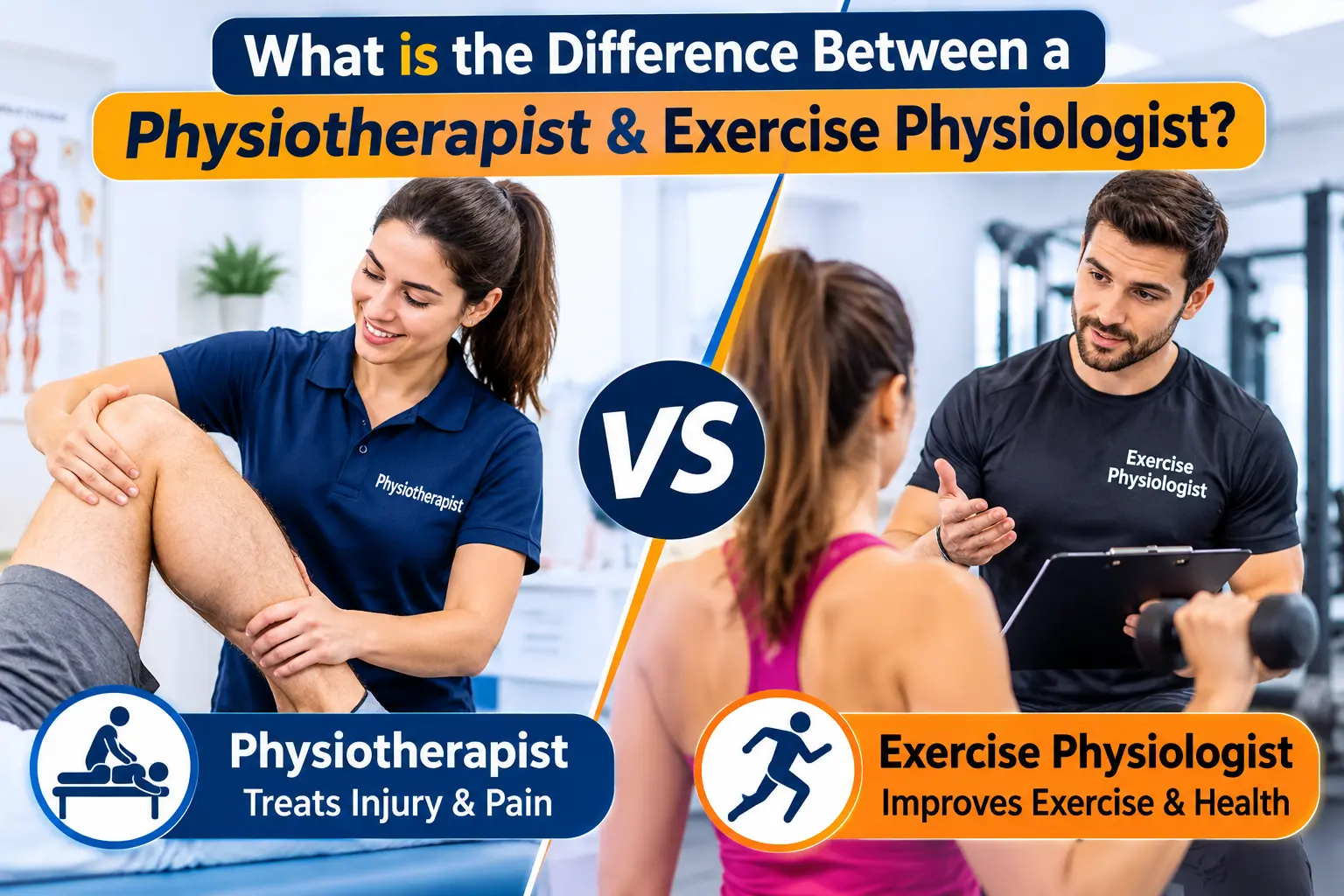
Although both professionals use movement and exercise to improve physical health, their responsibilities, treatment approaches, and areas of expertise are different.
Many people in Abu Dhabi are unsure whether they should book an appointment with a physiotherapist or an exercise specialist. Understanding these differences can help you choose the right treatment approach, avoid unnecessary delays, and receive care that matches your health requirements.
The main difference lies in their treatment methods and the stages of injury or health management they target, A physiotherapist primarily assesses, diagnoses, and treats physical conditions, injuries, pain, and movement limitations. An exercise physiologist focuses on using structured exercise programs to improve physical capacity, manage long-term health conditions, and support ongoing rehabilitation.
In this guide, we will explain the responsibilities of both professionals, compare their treatment methods, explore when you may need each specialist, and discuss how to find suitable rehabilitation support in Abu Dhabi.
Table of Contents
ToggleWhat Is a Physiotherapist?
A physiotherapist is a qualified healthcare professional who helps individuals recover from injuries, reduce physical pain, improve movement, and restore their ability to perform everyday activities.
Physiotherapy focuses on identifying problems affecting the muscles, joints, bones, nerves, and other body systems involved in movement. A physiotherapist evaluates the patient’s condition and develops an individualised treatment plan based on their symptoms, medical history, physical abilities, and recovery goals.
Physiotherapists work with people of different ages and physical conditions. Their patients may include athletes, office workers, older adults, children, and individuals recovering from surgery or serious injuries.
What Does a Physiotherapist Do?
A physiotherapist performs several important responsibilities throughout the rehabilitation process.
1. Assessing and Identifying Physical Problems
The first step usually involves a comprehensive physical assessment. The physiotherapist evaluates the patient’s posture, flexibility, strength, joint movement, balance, and functional abilities.
They also review medical history and discuss symptoms to understand the possible causes of physical limitations.
2. Managing Pain and Physical Injuries
Physiotherapists help patients manage conditions such as:
– Back pain and neck pain
– Shoulder and knee injuries
– Muscle strains and ligament injuries
– Sports-related injuries
– Joint stiffness and restricted movement
– Post-operative mobility problems
– Certain neurological conditions
Treatment depends on the patient’s individual diagnosis and clinical requirements.
3 Providing Hands-On Treatment
One important aspect of physiotherapy is the use of hands-on treatment techniques when clinically appropriate.
These may include:
– Manual therapy
– Joint mobilisation
– Soft tissue techniques
– Therapeutic massage
– Dry needling, where appropriately trained and indicated
– Movement and stretching techniques
These interventions may help improve mobility, manage symptoms, and support the patient’s rehabilitation.
4. Developing Rehabilitation Exercise Programs
Physiotherapists also prescribe therapeutic exercises to improve muscle strength, flexibility, coordination, and joint stability.
For example, someone recovering from a knee injury may receive exercises designed to restore knee movement and gradually rebuild the strength needed for walking, climbing stairs, and returning to normal activities.
When Should You See a Physiotherapist?
You may benefit from seeing a physiotherapist if you:
– Experience sudden or unexplained muscle or joint pain.
– Have difficulty walking or moving normally.
– Have suffered a sports injury.
– Are recovering from surgery.
– Experience persistent back or neck discomfort.
– Have reduced joint flexibility.
– Need professional rehabilitation after an injury.
If you have severe or unexplained symptoms, seek an appropriate medical assessment rather than attempting to manage them through exercise alone.
What Is an Exercise Physiologist?
An exercise physiologist is a specialist who uses scientifically designed physical activity and exercise programs to improve health, physical performance, and functional capacity.
Unlike general fitness trainers, qualified clinical exercise professionals work with individuals who may have specific medical conditions, physical limitations, injuries, or long-term rehabilitation needs.
Their primary approach involves understanding how the human body responds to physical activity and using this knowledge to create safe, structured, and progressive exercise interventions.
Exercise physiologists may support people living with diabetes, cardiovascular conditions, obesity, arthritis, and other long-term health challenges, depending on their qualifications and professional scope.
What Does an Exercise Physiologist Do?
An exercise physiologist focuses on improving physical health through planned movement, exercise, and lifestyle education.
1. Conducting Physical and Functional Assessments.
Before creating an exercise program, an exercise physiologist evaluates the individual’s current physical abilities.
Assessments may include:
– Muscle strength and endurance
– Cardiovascular fitness
– Flexibility and mobility
– Balance and coordination
– Functional movement
– Exercise tolerance
These assessments help determine an appropriate starting point and establish realistic improvement goals.
2. Designing Personalised Exercise Programs
Exercise physiologists create programs according to the patient’s health condition, fitness level, and rehabilitation requirements.
Programs may include:
– Resistance training
– Cardiovascular exercises
– Balance and coordination exercises
– Flexibility training
– Functional movement exercises
– Gradual endurance development
The intensity and frequency of these exercises are adjusted according to the individual’s progress and tolerance.
3. Supporting Chronic Disease Management
One of the important areas of exercise physiology is helping individuals manage long-term health conditions through appropriate physical activity.
For example, people living with type 2 diabetes may benefit from structured exercise that supports blood glucose management, cardiovascular fitness, and overall physical wellbeing.
Similarly, carefully planned exercise may help individuals with cardiovascular conditions improve their exercise capacity under appropriate medical guidance.
4. Improving Strength and Long-Term Physical Function
Exercise physiologists also help individuals rebuild physical strength after the initial stages of rehabilitation.
For example, a person who has completed the early stages of knee rehabilitation may require a progressive strengthening program to improve muscle endurance, balance, and confidence before returning to regular physical activities.
5. Providing Lifestyle and Exercise Education
Long-term health improvement requires more than occasional exercise sessions.
Exercise physiologists may educate individuals about maintaining consistent physical activity, setting achievable goals, developing healthier routines, and overcoming barriers to regular exercise.
When Should You See an Exercise Physiologist?
You may consider working with an appropriately qualified exercise physiologist if you:
– Want to improve overall strength and endurance.
– Need structured exercise for long-term health management.
– Are managing diabetes or other chronic health conditions.
– Want to improve balance and functional mobility.
– Need ongoing exercise support after rehabilitation.
– Want to return to physical activity after a period of inactivity.
– Need a personalised exercise routine based on your physical abilities.
If you have a new injury, unexplained pain, or an unstable medical condition, obtain an appropriate clinical assessment before beginning an exercise program.
What Is the Difference Between a Physiotherapist and an Exercise Physiologist?
The main difference between these professionals is their primary area of focus.
A physiotherapist assesses and manages physical injuries, pain, movement disorders, and functional limitations. An exercise physiologist focuses on using structured exercise interventions to improve physical capacity, manage chronic conditions, and support long-term health.
Although their responsibilities can overlap, their approaches are not identical.
Quick Comparison: Physiotherapist vs Exercise Physiologist
| Feature | Physiotherapist | Exercise Physiologist |
|—|—|—|
| Primary role | Assesses and treats injuries, pain, and movement problems | Develops exercise-based interventions for health and physical conditioning |
| Main focus | Clinical assessment and physical rehabilitation | Exercise prescription and long-term health improvement |
| Treatment approach | Hands-on techniques, education, and therapeutic exercise | Structured exercise, functional assessments, and coaching |
| Common conditions | Acute injuries, joint pain, post-surgical recovery, and movement limitations | Chronic health conditions, reduced fitness, and long-term conditioning |
| Rehabilitation stage | Often involved in early rehabilitation and throughout recovery | Often supports ongoing rehabilitation and long-term management |
| Exercise programs | Prescribes exercises as part of treatment | Specialises in designing and progressing exercise interventions |
| Long-term goals | Restore movement, reduce symptoms, and improve function | Improve physical capacity, independence, and sustainable activity |
It is important to understand that these are general differences, not strict boundaries. Physiotherapists also provide exercise-based rehabilitation, and exercise physiologists may support people recovering from injuries when appropriate.
Understanding the Difference in Their Treatment Methods
Although physiotherapists and exercise physiologists both use exercise to improve physical health, their treatment methods can vary.
Physiotherapist: Hands-On and Exercise-Based Treatment
Physiotherapy may combine passive and active treatment techniques.
Passive techniques involve interventions where the therapist provides direct physical treatment, such as joint mobilisation or soft tissue techniques.
Active techniques require the patient to participate in therapeutic exercises, movement training, and rehabilitation activities.
For example, a patient experiencing shoulder pain may receive a combination of manual therapy, mobility exercises, strengthening activities, and education about managing daily movements.
The treatment plan changes according to the patient’s response and recovery progress.
Exercise Physiologist: Active Exercise-Based Treatment
Exercise physiology primarily uses active interventions.
Rather than relying on hands-on treatment, the professional develops a structured exercise program that encourages the individual to improve strength, endurance, mobility, and overall physical capacity.
For example, an individual managing obesity or type 2 diabetes may receive a personalised exercise program combining cardiovascular activity, resistance training, and gradual lifestyle improvements.
The aim is to develop sustainable physical activity habits and support long-term health.
Physiotherapist vs Exercise Physiologist: Which One Should You See First?
Choosing between a physiotherapist and an exercise physiologist depends on your symptoms, health history, and treatment goals.
The right professional is not necessarily determined by how long you have experienced a problem. Your current physical condition and the type of support you require are more important.
1. If You Have a New Injury or Sudden Pain
A physiotherapist is generally the more appropriate starting point when you experience a new injury, unexplained musculoskeletal pain, or significant movement limitations.
A physiotherapist can assess your symptoms, identify movement-related problems within their scope, and determine whether further medical investigation or referral is required.
For example, someone who experiences sudden knee pain after playing football may need an assessment before starting strengthening exercises.
2. If You Are Recovering from Surgery
Physiotherapy is often an important part of post-operative rehabilitation.
Following procedures such as knee replacement, hip replacement, or certain spinal surgeries, a physiotherapist may help restore movement, manage functional limitations, and gradually rebuild physical abilities.
Exercise-based rehabilitation can also become increasingly important as recovery progresses.
3. If You Have a Chronic Health Condition
An exercise physiologist may be helpful when your main goal is managing a long-term condition through structured physical activity.
For example, individuals with diabetes, obesity, or cardiovascular conditions may benefit from carefully designed exercise programs that consider their health status and exercise tolerance.
Medical guidance is particularly important when exercise needs to be adapted around an existing health condition.
4. If You Want to Improve Strength and Fitness
If you have no new injury requiring assessment but want to improve strength, balance, endurance, or functional capacity, an appropriately qualified exercise professional may help you develop a suitable exercise routine.
The program should match your current abilities rather than follow a generic fitness plan.
Can a Physiotherapist and Exercise Physiologist Work Together?
Yes. In many rehabilitation situations, physiotherapists and exercise physiologists can complement each other’s expertise.
Recovery is not always a single-stage process. A person may initially require clinical assessment and treatment before progressing to a more demanding exercise program.
Consider an individual recovering from a knee injury.
During the early stages, a physiotherapist may focus on pain management, improving joint mobility, reducing functional limitations, and introducing appropriate rehabilitation exercises.
As the individual’s condition improves, a progressive exercise program may help rebuild strength, improve balance, and increase endurance.
An exercise physiologist can support this stage by developing an exercise plan that matches the individual’s capabilities and long-term goals.
Both professionals can communicate with other healthcare providers to help ensure continuity of care.
This collaborative approach can be particularly valuable for individuals who need ongoing rehabilitation or have multiple health considerations.
How to Choose the Right Physiotherapy or Rehabilitation Support in Abu Dhabi
Finding suitable rehabilitation support in Abu Dhabi involves more than choosing the nearest clinic.
You should consider your symptoms, treatment requirements, the professional’s qualifications, and the type of rehabilitation services available.
Here are several important factors to consider.
1. Check Professional Qualifications
Always check whether the healthcare professional has the appropriate qualifications, experience, and authorisation to provide the services being offered.
For physiotherapy services in Abu Dhabi, look for professionals licensed by the Department of Health – Abu Dhabi (DoH).
For exercise-based clinical services, check the practitioner’s relevant education, professional credentials, and whether the service is authorised within the healthcare facility’s scope.
2. Consider Your Specific Health Requirements
Different rehabilitation needs require different approaches.
Someone recovering from a sports injury may require physiotherapy, while someone seeking long-term exercise support for a chronic health condition may benefit from clinical exercise-based intervention.
A suitable professional should understand your health history and develop an individualised plan.
3. Look for Individualised Treatment Plans
Avoid assuming that one treatment program works for everyone.
A professional rehabilitation plan should consider:
– Your current physical condition
– Medical history
– Pain levels and movement limitations
– Personal recovery goals
– Daily activities and lifestyle
– Progress during treatment
4. Choose a Convenient Rehabilitation Location
Consistency is important during rehabilitation.
Consider a clinic or healthcare facility in Abu Dhabi that is accessible from your home or workplace and offers suitable appointment times.
You should also ask about available treatment services, appointment arrangements, and insurance coverage before booking.
Why Is Professional Physiotherapy Important for Your Long-Term Health?
Physiotherapy is not only about treating injuries after they happen. It can also help individuals improve movement quality, maintain physical independence, and address problems that interfere with everyday activities.
For example, office workers who spend extended periods sitting may develop stiffness, reduced mobility, and discomfort in the neck or back.
A physiotherapist can assess these problems and recommend appropriate movement strategies, exercises, and lifestyle adjustments.
Similarly, older adults may benefit from physiotherapy to improve balance, mobility, and confidence when performing everyday tasks.
Professional rehabilitation can also help athletes return to sports safely by addressing physical limitations and rebuilding functional strength.
The most appropriate treatment depends on an individual’s condition, and persistent or worsening symptoms should always receive proper medical attention.
Frequently Asked Questions
1. What is the main difference between a physiotherapist and an exercise physiologist?
A physiotherapist primarily assesses and treats physical injuries, pain, movement limitations, and rehabilitation needs. An exercise physiologist specialises in developing structured exercise programs to improve physical capacity, support chronic disease management, and promote long-term health.
2. Is a physiotherapist better than an exercise physiologist?
Neither professional is universally better. The right choice depends on your health requirements. A physiotherapist is generally more suitable for new injuries, unexplained pain, and post-operative rehabilitation, while an exercise physiologist may be more suitable for long-term exercise management and improving physical conditioning.
3. Can an exercise physiologist treat injuries?
Exercise physiologists can support injury rehabilitation through structured exercise programs when the condition has been appropriately assessed and the intervention falls within their professional scope. However, new or unexplained injuries should be assessed by an appropriately qualified healthcare professional.
4. Do physiotherapists use exercise?
Yes. Therapeutic exercise is an important part of physiotherapy. Physiotherapists prescribe specific movements and strengthening exercises to improve mobility, muscle function, flexibility, and recovery.
5. Can physiotherapy help with chronic pain?
Physiotherapy may help people manage certain chronic pain conditions through movement training, therapeutic exercise, education, and other clinically appropriate interventions. Treatment depends on the underlying condition and individual assessment.
6. When should I move from physiotherapy to exercise-based rehabilitation?
There is no fixed timeline. Progression depends on your injury, symptoms, functional abilities, and treatment goals. Your physiotherapist or treating healthcare professional can help determine when you are ready for more progressive exercise-based rehabilitation.
7. Can people with diabetes benefit from exercise physiology?
Yes. Appropriately prescribed exercise can support people with diabetes by improving physical fitness and helping with blood glucose management. However, the exercise program should account for medications, complications, and individual medical requirements.
8. How can I find a qualified physiotherapist in Abu Dhabi?
Look for a healthcare facility providing physiotherapy services through appropriately licensed professionals. Check the physiotherapist’s qualifications, relevant clinical experience, treatment options, and whether the facility is authorised by the Department of Health – Abu Dhabi.
9. Is exercise physiology the same as personal training?
No. Personal training generally focuses on fitness development, whereas clinical exercise physiology uses specialised exercise assessment and prescription to support individuals with medical conditions, injuries, disabilities, or specific rehabilitation needs. The professional’s qualifications and scope of practice are important.
10. Do I need a doctor’s referral before visiting a physiotherapist in Abu Dhabi?
Referral requirements may depend on your insurance provider, healthcare facility, and individual circumstances. Contact your chosen clinic and insurance company to confirm whether a referral is required before booking.
Final Thoughts: Choosing Between a Physiotherapist and an Exercise Physiologist
Understanding the difference between a physiotherapist and an exercise physiologist can help you make a more informed decision about your physical health.
A physiotherapist focuses on assessing and treating injuries, pain, and movement-related problems through clinical interventions, education, and therapeutic exercises. An exercise physiologist focuses on structured physical activity to improve strength, endurance, functional capacity, and long-term health management.
Both professionals can play valuable roles in rehabilitation, but the right choice depends on your individual condition and treatment goals.
If you are experiencing pain, recovering from surgery, or having difficulty with everyday movements, consider an appropriate physiotherapy assessment. If your goal is to improve physical conditioning or manage a long-term health condition through exercise, ask whether clinical exercise-based support is suitable for you.
Looking for Professional Physiotherapy Support in Abu Dhabi?
Your recovery deserves an approach that considers your individual needs, physical condition, and long-term goals.
At Snoclinic’s, our team is committed to helping individuals improve mobility, manage physical discomfort, and work towards better physical wellbeing through personalised care.
Whether you are recovering from an injury, experiencing joint or muscle discomfort, or looking for professional rehabilitation guidance, we are here to help.
Book your physiotherapy consultation today and take the first step towards moving better and feeling stronger.