If you have recently received porcelain or composite veneers in Abu Dhabi, you may be wondering: How do I care for my veneers? Do they require special toothpaste? Can you eat normally? How often should you visit your dentist?
The good news is that maintaining dental veneers does not require a complicated routine. With proper oral hygiene, sensible eating habits, and regular professional dental checkups, you can help protect your veneers and keep your smile looking beautiful for years.
This guide explains everything you need to know about caring for dental veneers, including daily cleaning practices, foods to avoid, protective measures, and professional maintenance tips.
Table of Contents
ToggleWhy Is Proper Veneer Care Important?
Dental veneers are thin, custom-made coverings attached to the front surfaces of teeth. They are commonly made from porcelain or composite resin and are designed to improve the colour, shape, size, and overall appearance of natural teeth.
Although veneers are durable, they are not indestructible. Porcelain veneers can chip or crack under excessive pressure, while composite veneers may become stained, scratched, or worn over time.
Proper maintenance is important for several reasons:
Maintains a natural appearance: Regular cleaning helps preserve the brightness and smooth finish of your veneers.
Protects surrounding teeth:Good oral hygiene prevents plaque buildup and reduces the risk of cavities in the natural tooth structure beneath and around veneers.
Supports healthy gums: Cleaning around veneer margins helps prevent gum inflammation and other periodontal problems.
Prevents unnecessary damage: Avoiding harmful habits can reduce the chances of cracks, chips, or premature replacement.
Extends veneer longevity: Appropriate care helps you get the most value from your cosmetic dental treatment.
It is important to remember that veneers do not protect you from every dental problem. The natural teeth underneath them and the surrounding gum tissue still require consistent care.
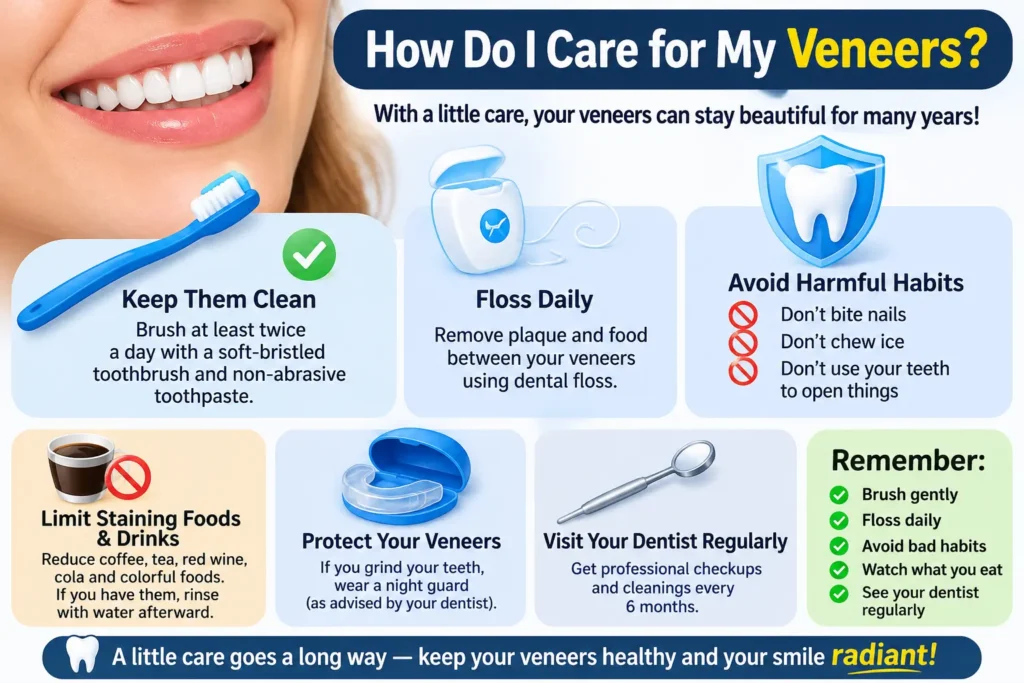
1. Brush Your Teeth Twice a Day Using a Soft Toothbrush
Brushing your teeth twice daily is one of the most important steps in maintaining dental veneers.
Use a soft-bristled toothbrush, whether manual or electric, to remove plaque and food particles without putting unnecessary pressure on your teeth. Brush gently using small circular movements, paying attention to the areas where your veneers meet your natural teeth.
Choose a non-abrasive fluoride toothpaste that is suitable for everyday use.
Avoid highly abrasive whitening or charcoal-based toothpastes. Some products contain ingredients that may gradually scratch or dull composite veneer surfaces. Although porcelain is relatively resistant to surface staining, abrasive products can still affect the surrounding natural teeth and gumline.
Tips for brushing with veneers:
– Brush twice daily for approximately two minutes.
– Use a soft-bristled toothbrush.
– Select a gentle, fluoride-containing toothpaste.
– Avoid applying excessive pressure.
– Clean carefully around the gumline.
– Replace your toothbrush when its bristles become worn.
A gentle brushing routine helps maintain clean veneers while protecting your natural teeth.
2. Floss Every Day to Protect Your Veneers and Gums
Brushing alone cannot remove all the plaque and food particles that accumulate between teeth. This is why daily flossing is essential, even if you have porcelain or composite veneers.
Use dental floss to clean between your teeth and gently around the edges of each veneer. Move the floss carefully rather than forcing it against the gums or snapping it into place.
A water flosser, sometimes called a water pick, can also be a helpful addition to your oral hygiene routine. It uses a controlled stream of water to remove food debris and plaque around the gumline and between teeth.
However, a water flosser should complement rather than automatically replace traditional flossing. Ask your dentist which cleaning method is most suitable for your dental condition.
Why is flossing important after getting veneers?
– Removes plaque between teeth.
– Helps reduce the risk of gum disease.
– Prevents food debris from collecting around veneer margins.
– Supports the health of the natural teeth beneath veneers.
– Helps maintain healthy gums around your cosmetic dental work.
Remember that veneers cover only part of your teeth. The exposed surfaces and spaces between teeth still need proper cleaning.
3. Use an Alcohol-Free Mouthwash
Adding a mouthwash to your daily oral hygiene routine can help maintain a cleaner and healthier mouth.
Consider using an alcohol-free mouthwash recommended by your dentist. It can help control oral bacteria, freshen your breath, and support gum health without the drying sensation associated with some alcohol-containing rinses.
Follow the product instructions and avoid treating mouthwash as a substitute for brushing or flossing.
If you experience gum sensitivity after receiving veneers, consult your dentist before introducing new oral hygiene products.
4. Avoid Biting Hard Objects
One of the easiest ways to damage dental veneers is by putting excessive pressure on them.
Although porcelain veneers are designed to withstand normal biting and chewing forces, biting hard objects can cause chips, cracks, or fractures.
Avoid chewing on:
– Ice cubes.
– Hard candies.
– Pen caps.
– Fingernails.
– Hard plastic objects.
– Other non-food items.
These habits can damage both veneers and natural teeth.
If you notice a small chip, rough edge, or unusual sensitivity, arrange a dental examination instead of trying to repair the veneer yourself.
Avoiding unnecessary pressure is particularly important for your front teeth because they are often directly involved when biting into hard objects.
5. Be Careful When Eating Hard and Crunchy Foods
You do not necessarily need to eliminate crunchy foods from your diet after getting dental veneers. However, changing how you eat certain foods can help reduce unnecessary pressure on your front teeth.
For example, avoid biting directly into whole apples, raw carrots, or very hard vegetables using your front veneers.
Instead, cut these foods into smaller, manageable pieces and chew them using your back teeth.
Other foods that may require extra care include:
– Hard nuts.
– Crusty bread.
– Tough meat.
– Hard biscuits.
– Crunchy snacks.
– Foods containing hard seeds or pits.
Your dentist may recommend additional precautions depending on the type of veneers you have and your bite alignment.
The goal is not to restrict your everyday diet unnecessarily but to avoid situations that could place excessive pressure on your cosmetic dental work.
6. Limit Foods and Drinks That Cause Staining
One of the major advantages of porcelain veneers is their resistance to staining. However, this does not mean every type of veneer is completely stain-proof.
Composite veneers are generally more susceptible to discoloration over time. Additionally, the natural teeth surrounding porcelain veneers and the adhesive margins may develop staining.
If you want to maintain a bright and attractive smile, consider limiting frequent consumption of strongly coloured foods and beverages.
Common examples include:
– Coffee.
– Black tea.
– Red wine.
– Dark-coloured berries.
– Soy sauce.
– Tomato-based sauces.
– Tobacco products.
You do not necessarily have to stop enjoying your favourite drinks. Instead, practise moderation, maintain good oral hygiene, and rinse your mouth with water after consuming staining beverages.
Avoid smoking and tobacco products because they can contribute to staining, gum problems, and other oral health complications.
An important point: Whitening toothpaste does not change the original colour of existing veneers. If your veneers become discoloured, consult your dentist about appropriate professional cleaning or restoration options.
7. Never Use Your Teeth as Tools
Your teeth are designed for biting and chewing food, not opening packages or performing everyday tasks.
Using your teeth as tools can create unnecessary pressure on veneers and increase the risk of fractures or damage to the bonding material.
Avoid using your teeth to:
– Open bottles or packages.
– Tear clothing tags.
– Cut tape.
– Bite plastic packaging.
– Hold objects while your hands are occupied.
– Crack nuts or other hard materials.
Even a single incident can damage a veneer, particularly if the force is concentrated on one tooth.
Keep scissors, bottle openers, and other appropriate tools available instead.
8. Wear a Night Guard If You Grind Your Teeth
Teeth grinding, also known as bruxism, can place significant pressure on dental veneers.
Some people grind or clench their teeth during sleep without even realising it. Over time, this habit may contribute to excessive wear, fractures, or damage to the veneer bonding.
Common signs of teeth grinding include:
– Jaw discomfort when waking up.
– Frequent headaches in the morning.
– Tooth sensitivity.
– Worn or flattened natural teeth.
– Jaw muscle tightness.
If you suspect that you grind your teeth, speak with your dentist about a custom-made night guard.
A night guard creates a protective barrier between your upper and lower teeth, helping reduce direct contact and excessive pressure while you sleep.
It is particularly important to address bruxism before or after cosmetic dental treatment because untreated grinding may affect the longevity of veneers.
9. Wear a Mouthguard During Sports
If you participate in sports or physical activities, protecting your veneers from accidental impact is essential.
Contact sports such as football, basketball, boxing, martial arts, and other high-impact activities can expose your teeth to sudden injuries.
A properly fitted athletic mouthguard helps cushion your teeth and reduce the risk of dental trauma.
Consider asking your dentist about a custom sports mouthguard, especially if you have invested in porcelain veneers or other cosmetic dental treatments.
Even recreational activities can involve unexpected falls or collisions, so taking preventive measures is worthwhile.
10. Schedule Regular Dental Checkups in Abu Dhabi
Professional dental checkups are an important part of long-term veneer maintenance.
Even when your veneers look perfectly fine, your dentist needs to examine the surrounding gums, natural teeth, and bonding margins to identify potential problems.
It is generally recommended that patients schedule dental checkups and professional cleanings at least twice a year, although your dentist may suggest more frequent visits depending on your oral health.
During a dental examination, your dentist may assess:
– The condition of your porcelain or composite veneers.
– The strength and stability of the bonding material.
– Gum health around each veneer.
– Plaque and tartar accumulation.
– Signs of tooth decay around veneer margins.
– Bite alignment and excessive pressure.
– Possible cracks, chips, or surface wear.
Regular appointments can help identify small problems before they become more complicated or expensive to treat.
If you live in Abu Dhabi, maintaining a relationship with a trusted cosmetic dentist makes it easier to monitor your veneers and receive professional advice whenever necessary.
For additional information about dental veneer maintenance and treatment, you can also explore the [Cleveland Clinic Dental Veneers Guide](https://my.clevelandclinic.org/health/treatments/23522-dental-veneers).
Porcelain vs Composite Veneers: Do They Require Different Care?
Both porcelain and composite veneers require good oral hygiene, but there are some differences in their maintenance requirements.
Understanding these differences can help you choose appropriate dental products and develop a suitable care routine.
| Feature | Porcelain Veneers | Composite Veneers |
| Stain resistance | Generally highly stain-resistant | More susceptible to staining |
| Surface durability | Strong but can chip or fracture | More prone to scratching and wear |
| Polishing | Professional care when needed | May require periodic polishing |
| Cleaning | Gentle brushing and daily flossing | Gentle brushing and daily flossing |
| Maintenance | Regular dental examinations | Regular examinations and possible repairs |
Porcelain veneers generally maintain their colour better, while composite veneers may need more frequent polishing or maintenance to preserve their appearance.
However, both types can last longer with appropriate care.
Your dentist can recommend the best maintenance approach based on your veneer material, bite, and overall oral health.
How Long Do Dental Veneers Last With Proper Care?
The lifespan of dental veneers depends on several factors, including the material used, the quality of placement, your oral hygiene routine, and everyday habits.
Porcelain veneers commonly last around 10 to 15 years or longer, while composite veneers generally have a shorter lifespan, often around 5 to 7 years. These are approximate ranges rather than guarantees.
You may extend the lifespan of your veneers by:
- Brushing twice daily with a soft toothbrush.
- Flossing regularly.
- Avoiding hard objects and excessive biting pressure.
- Limiting habits that cause staining.
- Wearing a night guard if you grind your teeth.
- Using a mouthguard during contact sports.
- Attending regular dental examinations.
- Following your dentist’s individual care instructions.
Remember that veneers may eventually require repair or replacement. Proper care reduces avoidable damage but cannot guarantee that they will last indefinitely.
Common Mistakes to Avoid When Caring for Dental Veneers
Even people who maintain good oral hygiene sometimes make mistakes that can affect their veneers.
Here are some common habits to avoid:
Using abrasive whitening products: Some whitening and charcoal toothpastes can scratch composite veneers or affect their polished appearance.
Skipping flossing: Plaque can accumulate between teeth and around veneer margins, increasing the risk of gum disease and decay in the underlying natural teeth.
Ignoring sensitivity: Persistent sensitivity or discomfort should be evaluated by a dental professional rather than ignored.
Biting hard foods with front teeth: Excessive pressure can damage veneers, particularly when biting hard or crunchy foods.
Avoiding dental checkups: Problems such as gum inflammation, loose bonding, and tooth decay may develop without obvious symptoms.
Trying DIY veneer repairs: Household adhesives and at-home repair products are not suitable for repairing dental veneers. Always consult your dentist.
Avoiding these mistakes can help maintain the appearance and functionality of your veneers.
When Should You Contact Your Dentist About Your Veneers?
Although veneers are designed to provide a comfortable and natural-looking result, certain symptoms should not be ignored.
Contact your dentist if you experience:
– A chipped or cracked veneer.
– A veneer that feels loose.
– Persistent tooth sensitivity.
– Pain while chewing.
– Swollen or bleeding gums.
– Changes in your bite.
– Unusual gaps around veneer edges.
– Persistent bad breath despite good oral hygiene.
Early professional assessment can help determine whether you need polishing, bonding repair, gum treatment, or veneer replacement.
Do not attempt to remove or reattach a loose veneer yourself.
Your Daily Dental Veneer Care Checklist
Maintaining veneers becomes easier when you follow a consistent daily routine.
Here is a simple checklist you can follow:
Morning Routine
– Brush for two minutes using a soft-bristled toothbrush.
– Use a non-abrasive fluoride toothpaste.
– Clean your tongue and maintain general oral hygiene.
During the Day
– Avoid biting hard objects.
– Cut hard fruits and vegetables into smaller pieces.
– Drink water after consuming coffee, tea, or other staining beverages.
– Avoid using your teeth to open packages.
Evening Routine
– Brush gently before sleeping.
– Floss between all teeth.
– Use an alcohol-free mouthwash if recommended.
– Wear your prescribed night guard if you grind your teeth.
Every Six Months
– Schedule a professional dental examination.
– Have your veneers and gum health assessed.
– Follow your dentist’s recommendations for cleaning and maintenance.
Following these simple steps can make a significant difference in maintaining a healthy and attractive smile.
Frequently Asked Questions About Caring for Dental Veneers
1. How do I care for my veneers every day?
Brush your teeth twice daily using a soft-bristled toothbrush and non-abrasive fluoride toothpaste. Floss once a day, clean around your gumline, and use an alcohol-free mouthwash if recommended by your dentist. Avoid biting hard objects and maintain regular dental checkups.
2. Can I use normal toothpaste on my veneers?
Yes, you can generally use regular fluoride toothpaste, provided it is non-abrasive. Avoid highly abrasive whitening and charcoal-based products because they may scratch composite surfaces or affect the finish of your veneers.
3. Can dental veneers get stained?
Porcelain veneers are highly resistant to staining, but they are not completely immune to discolouration around their edges. Composite veneers are more likely to absorb stains from coffee, tea, red wine, and tobacco products.
4. Can I eat normally after getting veneers?
Yes. Most people can enjoy a normal diet after their dentist confirms that their veneers are properly bonded and comfortable. However, avoid biting directly into very hard foods and do not chew ice, hard candy, or non-food objects.
5. Should I floss if I have porcelain veneers?
Absolutely. Flossing is essential because plaque can accumulate between your teeth and around veneer margins. Daily flossing helps protect your gums and the natural teeth supporting your veneers.
6. Do I need a special toothbrush for veneers?
You do not necessarily need a specialised toothbrush. A soft-bristled manual or electric toothbrush is generally suitable. The most important thing is to brush gently and consistently.
7. How often should I visit a dentist after getting veneers?
Most patients should schedule professional dental checkups and cleanings at least twice a year. Your dentist may recommend a different schedule depending on your oral health, gum condition, and veneer maintenance requirements.
8. Can I whiten my veneers at home?
No. Traditional teeth-whitening products do not change the original colour of porcelain or composite veneers. If your veneers appear discoloured, consult your dentist about professional cleaning, polishing, or replacement options.
9. What should I do if my veneer becomes loose or chipped?
Contact your dentist as soon as possible. Avoid chewing on the affected tooth and do not attempt to repair the veneer using household adhesives. Your dentist will examine the damage and recommend an appropriate solution.
10. Are veneers difficult to maintain in Abu Dhabi?
No. Dental veneers can be maintained with the same basic oral hygiene practices used for natural teeth. Consistent brushing, flossing, appropriate dietary habits, and regular dental visits are sufficient for most patients.
Conclusion: Maintain Your Beautiful Smile With Proper Veneer Care
Dental veneers can significantly improve your smile, but maintaining their appearance requires consistent attention and good oral hygiene habits. Whether you have porcelain or composite veneers, simple steps such as brushing twice daily, flossing, avoiding hard objects, limiting staining foods, and attending regular dental checkups can help protect your investment.
If you are living in Abu Dhabi and have recently received veneers or are considering cosmetic dental treatment, professional guidance is important for achieving and maintaining healthy, natural-looking results.
Remember, a beautiful smile does not end when your dental treatment is complete. Taking care of your veneers every day helps keep your smile confident, comfortable, and healthy for years to come.
Looking for Professional Dental Veneer Care in Abu Dhabi?
Whether you need advice about maintaining existing veneers or are considering a smile makeover, professional dental guidance can help you make informed decisions.
Book a dental consultation today to discuss your veneer maintenance needs and discover the right approach to keeping your smile looking its best.
Contact our dental team in Abu Dhabi today and take the next step towards maintaining a healthy, beautiful smile!