
The best choice is not determined by material alone. Your bite, tooth health, cosmetic goals and the dentist’s technique all affect the result. An examination is needed before deciding whether composite veneers, porcelain veneers or another option is appropriate.
Table of Contents
ToggleWhat Are Composite Veneers?
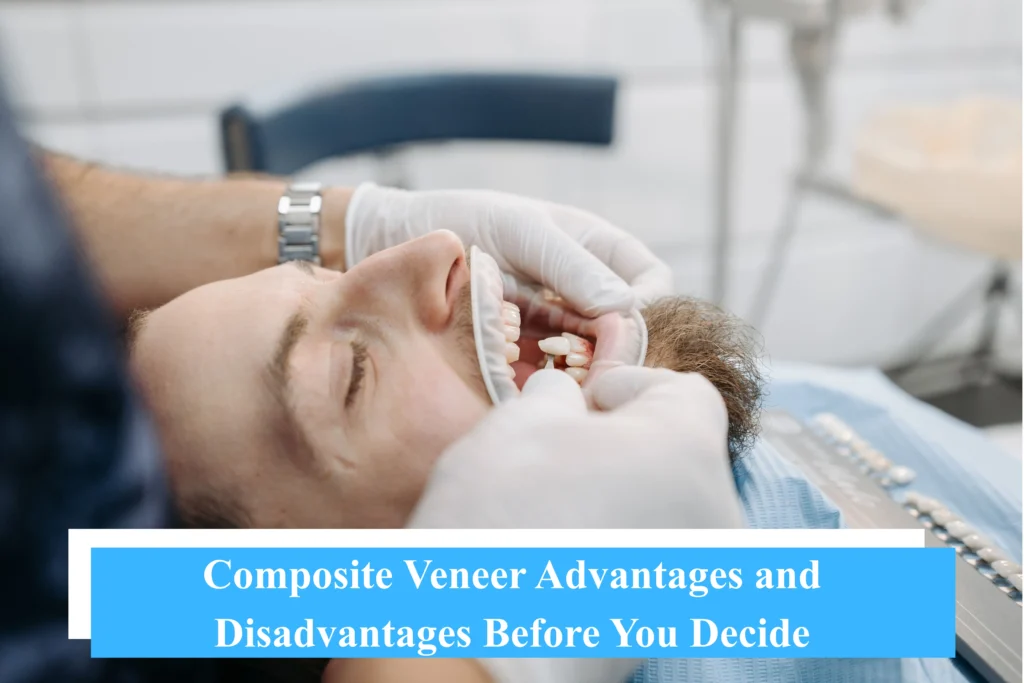
With a direct composite veneer, the dentist bonds and shapes resin on the tooth, hardens it with a curing light and polishes the surface. Indirect composite restorations are made outside the mouth before being fitted. The appointment sequence depends on the technique and the complexity of the work.
Composite bonding and composite veneers use related materials, but the amount of tooth surface covered can differ. Repairing one chipped corner is not the same commitment as covering the front surfaces of several teeth.
Advantages of Composite Veneers
Potential to Preserve More Enamel
Composite veneers may need less enamel removal than traditional porcelain veneers. An additive approach is possible for some concerns, especially where increasing the tooth’s volume is appropriate. This advantage depends on the case and should not be assumed from the word “composite.”
Repair and Adjustment Options
A damaged area may be repaired by adding resin rather than replacing the entire veneer. The dentist may also be able to modify selected shape or surface features. Repairability is useful, but repeated repairs still take time and may affect appearance.
Fewer Stages in Suitable Cases
Direct composite veneers can sometimes be completed without a separate laboratory manufacturing stage. This can reduce the number of visits for straightforward treatment. More extensive work may still require planning appointments, a trial design or later adjustments.
Control Over the Cosmetic Design
During planning, discuss length, shape and how many teeth actually need treatment. A restrained change may be more appropriate than making every tooth identical. Ask how the proposed design will fit your bite and the neighboring teeth.
Disadvantages of Composite Veneers
Staining and Loss of Surface Finish
Composite is generally less stain-resistant than porcelain. Over time, the surface can become dull or discolored and may need polishing or repair. Lifestyle, material properties and cleaning habits influence maintenance.
Wear and Chipping
Resin restorations can wear or chip. A systematic review of resin composite laminate veneers reported complications involving surface roughness, color mismatch and marginal discoloration. A restoration surviving in place does not necessarily mean it has required no maintenance.
Limits to What Veneers Can Correct
Composite veneers do not move tooth roots, treat gum disease or replace missing supporting tissue. Attempting to hide a major alignment problem by adding material may create a bulky appearance. Some concerns are better addressed through orthodontics or restorative treatment.
Results Depend on Planning and Technique
Shade matching, contour, finishing and bite adjustment all matter. Ask to review examples of comparable cases, but remember that another patient’s photographs cannot predict your exact outcome. Request an explanation of the proposed changes and their limitations.
Composite Veneers Compared With Porcelain
Porcelain generally offers better resistance to staining and wear, while composite often offers easier repair and a potentially more conservative procedure. Neither material is universally better. Traditional porcelain treatment commonly involves laboratory fabrication and permanent preparation.
Compare the whole plan rather than only the initial fee. Ask whether the quote includes follow-up, adjustments and future repair. Costs vary by clinic, location, number of teeth and the treatment required.
How to Care for Composite Veneers
Clean the teeth and restoration margins every day, attend dental reviews and avoid biting hard objects. Ask the dentist about appropriate toothpaste and whether grinding needs management. Tooth whitening does not predictably lighten existing composite, so discuss color goals before treatment.
If a veneer feels rough, chips or changes your bite, arrange a review. Attempting to file or glue a restoration at home can damage it or delay proper care.
Who May Be a Suitable Candidate for Composite Veneers?
Composite veneers are worth discussing when the cosmetic concern can be addressed by changing the visible tooth surface without creating an unsuitable contour or bite. A person with a small shape irregularity may need a different amount of treatment from someone seeking changes across several teeth.
The dentist should confirm that the teeth and gums are healthy enough for the proposed work. If there is active disease, treatment of that problem comes first. Cosmetic coverage does not substitute for managing decay, inflammation or a tooth that needs a different kind of restoration.
Your expectations also affect suitability. If you expect a material to remain perfectly glossy and unchanged indefinitely, composite may not match that expectation. If you are comfortable with review and possible maintenance, its repair options may be attractive. Discuss these preferences before choosing a material.
What Happens During Direct Composite Veneer Treatment?
Planning the Changes
The dentist examines the teeth and discusses which features you want to change. Planning can include photographs, measurements or a preview, depending on the case. The point is to agree on a sensible outcome rather than to select a shade without considering shape and function.
Ask whether every proposed tooth needs full surface coverage. A localized addition may be enough for a small defect. Also ask whether another treatment should be completed first, particularly if you want to change the color of surrounding natural teeth.
Bonding and Shaping the Resin
The dentist prepares the surface as needed and uses a bonding technique appropriate to the tooth and material. Resin is shaped to create the planned contours and hardened with a curing light. The exact steps depend on the technique and clinical situation.
The result needs more than an attractive front view. The dentist must consider the edge, the spaces between teeth and how the restoration works when you bite. If you feel an unexpected interference afterward, report it for assessment.
Finishing and Reviewing the Result
Finishing and polishing influence both appearance and surface quality. The dentist may review the shape, contact points and bite before you leave. Some cases also need a follow-up appointment to assess comfort and any adjustments.
Take time to discuss what you notice. A surface that feels rough to your tongue or a contact that makes flossing difficult is worth mentioning. It is better to ask for a clinical review than to assume an unfamiliar sensation must be permanent.
What Determines How Natural Composite Veneers Look?
Shade alone does not create a natural appearance. Tooth shape, length, surface finish and the relationship between neighboring teeth also matter. A very uniform design can look different from a smile that retains small natural variations.
Explain your preference for a subtle result or a more visible change. The dentist can discuss whether that preference is achievable with the selected material and your starting teeth. A photograph of another smile can help communicate a direction, but it cannot determine what will work on your anatomy.
Ask how the appearance might change over time. Composite can require polishing or repair, and a shade match at placement may not remain identical if surrounding natural teeth change color. This is particularly relevant if whitening is considered later.
Maintenance Costs and Value Over Time
A lower initial price does not necessarily mean the lowest cost over several years. Follow-up, polishing, repairs and replacement can contribute to the overall commitment. Conversely, a repairable restoration may sometimes avoid replacing the whole veneer after a localized problem.
Request a written estimate describing the number of teeth, the technique and what follow-up is included. Ask whether routine maintenance is charged separately. You do not need an exact lifetime cost prediction, but you should understand the kinds of expenses that may arise.
When comparing quotes, check that the plans are comparable. One may involve localized bonding on a few teeth, while another covers most of the visible smile. Materials, preparation and the amount of work all affect what the quoted fee represents.
Habits That Can Affect Composite Veneers
Tell the dentist about grinding, clenching and any history of cracked dental work. These habits can influence the treatment plan and the need to discuss protection. A mouthguard or night guard should be recommended for an identified reason and fitted or selected appropriately.
Avoid using the restored teeth as tools. Opening packaging with your teeth or biting hard objects introduces forces unrelated to normal eating. If you participate in activities with a risk of mouth injury, ask about suitable protection.
Cleaning should remain comfortable and consistent. If the contour makes it difficult to clean between teeth, seek a review. A cosmetic result that is hard to maintain deserves attention rather than a decision to avoid that area.
Alternatives to Full Composite Veneers
Limited bonding may suit a small chip or isolated shape concern. Whitening may help when the main issue is the color of natural teeth. Orthodontic treatment may be appropriate when the problem is tooth position. Porcelain may be considered when its properties and the required preparation fit your priorities.
There is also the option of leaving a healthy tooth unchanged. Minor differences in shape do not always need treatment. A consultation should help you judge the cosmetic benefit against the tooth changes, cost and maintenance involved.
Making a Balanced Decision
List the two or three changes that matter most to you, then ask how well composite veneers can address each one. Clarify the compromises you would accept, such as periodic polishing or a less dramatic color change. This makes the decision more concrete than asking whether composite is generally “good” or “bad.”
Composite veneers offer useful advantages in appropriate cases, but the quality of the plan matters as much as the material. Choose a treatment you understand and can maintain, with a dentist who explains both the expected improvement and its limitations.
Frequently Asked Questions
Are Composite Veneers Reversible?
Not always. Reversibility depends on whether tooth structure was removed and how the restoration can be taken off. Obtain a case-specific explanation before treatment.
How Long Do Composite Veneers Last?
There is no guaranteed lifespan. Condition, maintenance, bite forces and technique all influence longevity. Ask what follow-up and repair are likely in your situation.
Are Composite Veneers Worth It?
They may be appropriate when the expected cosmetic benefit justifies the maintenance and tooth changes involved. A decision is easier when you compare them with limited bonding, whitening or leaving healthy teeth untreated