In Abu Dhabi, patients have access to various plastic and aesthetic surgery options designed to address individual needs. Some people consider cosmetic procedures to enhance facial features, improve body proportions, or reduce visible signs of ageing. Others may require reconstructive surgery following an accident, burn injury, congenital condition, or medical treatment.
So, what exactly separates these two types of surgery? Is cosmetic surgery only about appearance, and is reconstructive surgery always medically necessary?
In this guide, we explain the key differences between cosmetic and reconstructive surgery, explore common procedures, discuss their benefits, and help you understand what to consider before choosing a treatment in Abu Dhabi.
Table of Contents
ToggleWhat Is the Difference Between Cosmetic and Reconstructive Surgery?
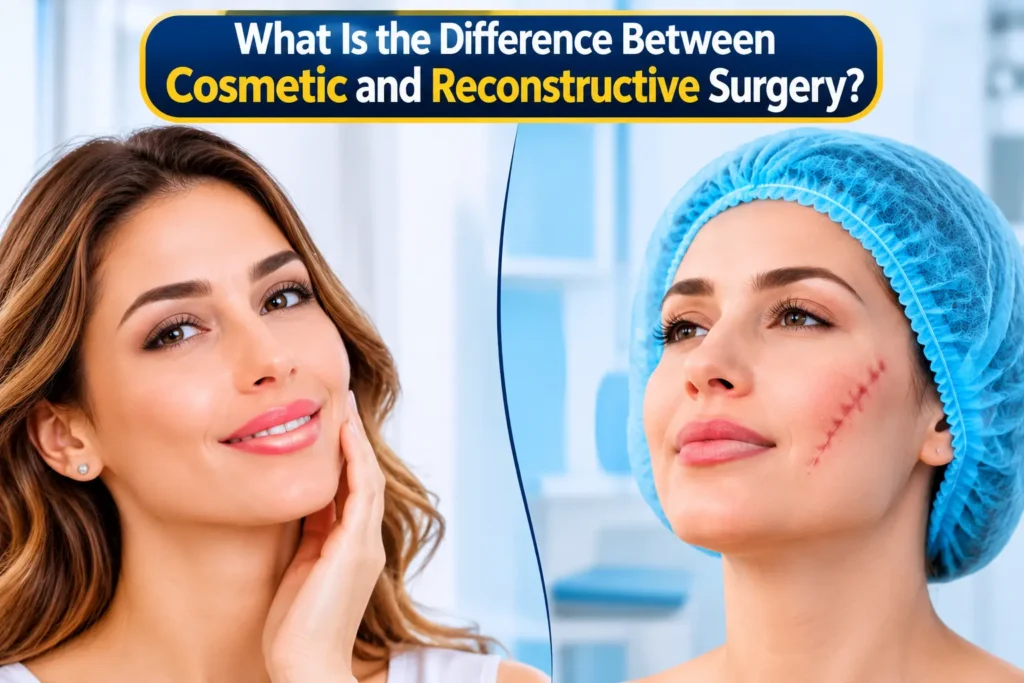
The primary difference between cosmetic and reconstructive surgery is their underlying purpose.
Cosmetic surgery focuses on enhancing the appearance of healthy body structures, while reconstructive surgery aims to restore the normal appearance and function of body parts affected by congenital abnormalities, injuries, diseases, or previous surgical procedures.
Both are specialised areas within plastic surgery and may involve similar surgical techniques. However, the reason for performing the procedure determines whether it is primarily cosmetic or reconstructive.
For example, someone who wants to change the shape of their nose for aesthetic reasons may consider cosmetic rhinoplasty. However, a person experiencing breathing difficulties following a nasal injury may require reconstructive surgery to restore proper function.
Understanding this distinction helps patients make informed decisions about their treatment options.
What Is Cosmetic Surgery?
Cosmetic surgery refers to surgical procedures performed to improve or enhance a person’s physical appearance. These procedures generally involve reshaping normal anatomical structures to achieve a desired aesthetic result.
People consider cosmetic surgery for different reasons. Some want to improve facial symmetry, while others wish to address specific body concerns or achieve a more balanced appearance.
Unlike reconstructive procedures, cosmetic surgery is generally elective, meaning patients choose to undergo treatment based on their personal preferences rather than an essential medical requirement.
Common Types of Cosmetic Surgery
Several cosmetic procedures are available to address different aesthetic concerns.
- Rhinoplasty (Nose Reshaping)
Rhinoplasty is a surgical procedure that changes the shape, size, or proportions of the nose. Patients may consider it to improve facial harmony, refine the nasal tip, or address a prominent nasal bridge.
Depending on the patient’s needs, rhinoplasty may also have a functional purpose.
- Liposuction
Liposuction is a body-contouring procedure that removes localised fat deposits from selected areas of the body. Common treatment areas include the abdomen, thighs, hips, arms, and chin.
It is not a weight-loss treatment and is generally considered for patients seeking to address stubborn fat that remains despite lifestyle changes.
- Facelift Surgery
Facelift surgery aims to address visible signs of facial ageing, including loose skin, deeper folds, and changes in facial contours.
The procedure may help create a smoother and more refreshed appearance, depending on the patient’s anatomy and treatment goals.
- Breast Augmentation
Breast augmentation involves using implants or, in selected cases, fat transfer to increase breast volume or change breast shape.
Patients may consider this procedure to address naturally smaller breasts, changes following pregnancy, or differences in breast volume.
- Tummy Tuck (Abdominoplasty)
A tummy tuck removes excess abdominal skin and may tighten weakened abdominal muscles. It is often considered by people experiencing loose skin following significant weight changes or pregnancy.
Each cosmetic procedure requires an individual assessment to determine suitability, possible risks, and realistic outcomes.
What Is Reconstructive Surgery?
Reconstructive surgery focuses on repairing, rebuilding, or restoring body structures affected by medical conditions, injuries, congenital abnormalities, or previous surgical treatment.
Its primary objective is to improve physical function and restore a more normal appearance where possible.
Unlike purely aesthetic procedures, reconstructive surgery often addresses problems that affect a person’s everyday activities, physical comfort, or overall health.
Patients may require reconstructive treatment after accidents, severe burns, cancer surgery, or complications involving damaged tissues.
Common Types of Reconstructive Surgery
- Cleft Lip and Palate Repair
Cleft lip and palate are congenital conditions that affect the development of the upper lip or roof of the mouth.
Reconstructive surgery can help improve the structure of these areas and support important functions such as eating, speaking, and facial development.
- Breast Reconstruction After Mastectomy
Some patients undergo mastectomy as part of breast cancer treatment. Breast reconstruction may help rebuild the breast’s shape using implants, the patient’s own tissue, or a combination of techniques.
The appropriate approach depends on the patient’s medical history, treatment plan, and personal preferences.
- Burn Reconstruction
Severe burns can damage the skin and underlying tissues, sometimes causing tight scars that restrict movement.
Reconstructive procedures may involve skin grafting, scar revision, or tissue reconstruction to improve healing, mobility, and appearance.
- Facial Reconstruction
Facial reconstruction may be necessary following serious injuries, accidents, tumour removal, or congenital abnormalities.
Depending on the condition, treatment can involve repairing damaged skin, soft tissue, nerves, or underlying facial structures.
- Hand Reconstruction
Injuries, congenital abnormalities, and certain medical conditions can affect hand movement, strength, and flexibility.
Reconstructive hand surgery aims to restore function and improve the ability to perform everyday activities.
The specific procedure depends on the nature and severity of the condition.
Cosmetic vs Reconstructive Surgery: Key Differences
Although both procedures belong to plastic surgery, their objectives and medical considerations are different.
Here is a comparison to help explain the distinction:
| Feature | Cosmetic Surgery | Reconstructive Surgery |
| Main purpose | Enhance physical appearance | Restore appearance and function |
| Medical necessity | Generally elective | Often medically indicated |
| Main focus | Aesthetic improvement | Repair and restoration |
| Common reasons | Personal aesthetic preferences | Injury, disease, burns, birth defects |
| Examples | Facelift, liposuction, breast augmentation | Burn reconstruction, cleft lip repair, breast reconstruction |
| Patient goals | Improve appearance and proportions | Improve function and address physical abnormalities |
| Insurance | Usually self-funded | May qualify for insurance coverage |
It is important to understand that insurance coverage is not automatically guaranteed for every reconstructive procedure. Coverage depends on the medical indication, insurance provider, policy terms, and any required pre-authorisation.
الفرق بين جراحة التجميل والجراحة الترميمية
لفهم الفرق بين جراحة التجميل والجراحة الترميمية، من المهم معرفة الهدف الأساسي من كل إجراء طبي والاحتياجات التي يسعى إلى تلبيتها.
جراحة التجميل (Cosmetic Surgery) تهدف إلى تحسين المظهر الجمالي للوجه أو الجسم، وتعزيز التناسق والتوازن بين ملامح الجسم المختلفة. وغالباً ما يتم إجراؤها بناءً على رغبة الشخص في تحسين مظهره، دون وجود مشكلة طبية أساسية تتطلب التدخل الجراحي.
أما الجراحة الترميمية (Reconstructive Surgery) فتهدف إلى إصلاح أو استعادة الشكل والوظيفة الطبيعية لأجزاء الجسم المتضررة نتيجة الإصابات أو الحوادث أو الأمراض أو العيوب الخلقية.
1. الجراحة الترميمية (Reconstructive Surgery)
تُجرى الجراحة الترميمية بهدف إصلاح التشوهات واستعادة وظائف الأعضاء والأنسجة المتضررة، مع تحسين المظهر الطبيعي للمنطقة المصابة قدر الإمكان.
ومن أبرز الحالات التي قد تتطلب هذا النوع من الجراحة:
- العيوب الخلقية: مثل الشفة الأرنبية وشق سقف الحلق وبعض التشوهات التي تظهر منذ الولادة.
- الإصابات والحوادث: مثل الحروق الشديدة والجروح العميقة وإصابات الوجه واليدين.
- الأمراض والعمليات الجراحية: مثل إعادة بناء الثدي بعد استئصاله بسبب سرطان الثدي أو ترميم الأنسجة بعد إزالة الأورام الجلدية.
وتُعتبر الجراحة الترميمية ضرورية من الناحية الطبية في العديد من الحالات، وقد تكون مشمولة بالتأمين الصحي وفقاً للتشخيص الطبي وشروط وثيقة التأمين.
2. جراحة التجميل (Cosmetic Surgery)
تهدف جراحة التجميل إلى تحسين المظهر الخارجي وتناسق ملامح الوجه والجسم، مع التركيز على تحقيق النتائج الجمالية التي يرغب فيها المريض.
ومن أبرز الإجراءات التجميلية:
- تجميل الأنف لتحسين شكله وتناسقه مع ملامح الوجه.
- شفط الدهون لتحسين شكل الجسم وإزالة الدهون الموضعية.
- شد الوجه للتعامل مع ترهل الجلد وعلامات التقدم في العمر.
- تكبير الثدي أو تحسين شكله وحجمه.
- شد البطن لإزالة الجلد الزائد وتحسين محيط منطقة البطن.
وعادةً ما تكون جراحة التجميل اختيارية وغير ضرورية من الناحية الطبية، ولذلك لا تغطيها معظم خطط التأمين الصحي عندما يكون الهدف تجميلياً بحتاً.
Can a Procedure Be Both Cosmetic and Reconstructive?
Yes. Some surgical procedures can have both cosmetic and reconstructive objectives. The classification depends on the patient’s condition, the reason for treatment, and the primary goal of the operation.
This is particularly common with procedures involving the nose, eyelids, breasts, and facial structures.
Rhinoplasty: An Example of Overlapping Goals
Rhinoplasty is a good example of how cosmetic and reconstructive surgery can overlap.
A patient who wants to refine the shape of their nose or improve facial proportions may undergo cosmetic rhinoplasty.
However, someone who has sustained a nasal fracture and experiences breathing difficulties may require surgery to repair damaged structures and improve airflow.
In some cases, both functional and aesthetic concerns can be addressed during the same operation.
Eyelid Surgery (Blepharoplasty)
Eyelid surgery can also serve different purposes.
When performed to reduce excess skin or improve the appearance of ageing eyes, it is generally considered cosmetic.
However, when drooping upper eyelids interfere with vision, surgery may be medically indicated and considered reconstructive or functional, depending on the circumstances.
This demonstrates why the name of a surgical procedure alone does not determine its medical classification.
Are Cosmetic and Reconstructive Surgery Techniques the Same?
There can be considerable overlap in the techniques used for cosmetic and reconstructive surgery.
Both may involve tissue removal, skin grafting, suturing, tissue repositioning, and advanced surgical reconstruction methods.
The difference is mainly related to the intended outcome.
For example, a surgeon performing facial reconstruction after an accident may use techniques that also help restore facial symmetry and appearance. Similarly, cosmetic surgery may involve adjustments to anatomical structures while preserving their normal function.
Plastic surgeons may receive training in both areas, although their experience and areas of specialisation can vary.
For patients in Abu Dhabi, selecting a suitably qualified specialist with experience relevant to the intended procedure is an important part of treatment planning.
Which Type of Surgery Is Right for You?
Choosing between cosmetic and reconstructive surgery depends on your individual concerns, medical history, and treatment goals.
If your primary concern is improving an existing feature or achieving a particular aesthetic result, cosmetic surgery may be an appropriate option.
If you have experienced an injury, have a congenital abnormality, or need to restore a body structure affected by disease or previous surgery, reconstructive treatment may be more suitable.
However, patients should not decide the medical classification of a procedure themselves.
A qualified surgeon can assess the affected area, review relevant medical information, discuss treatment alternatives, and recommend an appropriate approach.
What to Consider Before Surgery
Before proceeding with cosmetic or reconstructive surgery in Abu Dhabi, consider the following factors:
- Surgeon Qualifications and Experience
Check the surgeon’s professional qualifications, relevant specialist training, licensing, and experience with the specific procedure.
- Medical Assessment
A detailed assessment helps identify potential health concerns and determine whether surgery is appropriate.
- Expected Results
Discuss realistic outcomes and understand what the procedure can and cannot achieve.
- Potential Risks
Every surgical procedure involves potential risks, including infection, bleeding, scarring, anaesthesia-related complications, and recovery-related concerns. The risks vary depending on the procedure and individual health factors.
- Recovery and Aftercare
Ask about recovery time, follow-up appointments, activity restrictions, and post-operative instructions.
- Treatment Costs and Insurance
Request a clear explanation of treatment costs. If the procedure has a reconstructive indication, check with your insurer regarding eligibility and pre-authorisation requirements.
Why Consider a Plastic Surgery Consultation in Abu Dhabi?
Abu Dhabi offers access to a range of medical and aesthetic healthcare services, including consultations for cosmetic and reconstructive procedures.
However, choosing a surgical treatment should involve more than comparing prices or looking at before-and-after photographs.
A professional consultation provides an opportunity to discuss your concerns, understand available treatment options, and determine whether surgery is appropriate for your circumstances.
During an initial consultation, your surgeon may:
- Review your medical and surgical history.
- Examine the area you want to address.
- Understand your functional or aesthetic concerns.
- Explain suitable surgical and non-surgical alternatives.
- Discuss potential complications and recovery expectations.
- Provide an individualised treatment recommendation.
The aim is to ensure that patients understand their options and can make informed decisions about their healthcare.
Frequently Asked Questions (FAQs)
1. What is the main difference between cosmetic and reconstructive surgery?
Cosmetic surgery improves the appearance of normal body structures, while reconstructive surgery repairs or restores body parts affected by injuries, diseases, congenital abnormalities, or previous medical treatment.
2. Is cosmetic surgery considered medically necessary?
Most cosmetic procedures are elective because they are performed primarily to improve appearance rather than treat an underlying medical problem. However, a surgeon must assess each patient’s circumstances individually.
3. Is reconstructive surgery covered by health insurance in Abu Dhabi?
Some reconstructive procedures may qualify for insurance coverage when they are medically necessary. However, coverage depends on the patient’s insurance policy, medical documentation, insurer approval, and applicable requirements.
4. Can rhinoplasty be both cosmetic and reconstructive?
Yes. Rhinoplasty can improve the appearance of the nose, correct structural abnormalities, or address breathing problems. Some patients may require a combination of functional and aesthetic improvements.
5. Is plastic surgery the same as cosmetic surgery?
No. Plastic surgery is a broader surgical specialty that includes both cosmetic and reconstructive procedures. Cosmetic surgery focuses on aesthetic enhancement, whereas reconstructive surgery focuses on repairing damaged or abnormal structures and restoring function.
6. How do I choose a plastic surgeon in Abu Dhabi?
Look for an appropriately licensed and qualified surgeon with relevant specialist training and experience in your intended procedure. Discuss your medical history, treatment goals, possible risks, and recovery expectations before making a decision.
7. Does reconstructive surgery only improve physical appearance?
No. Its primary objective is often to restore physical function, although improving appearance can also be an important part of the treatment.
8. How long does recovery take after plastic surgery?
Recovery varies according to the procedure, surgical complexity, and individual health. Minor procedures may require relatively short recovery periods, while complex reconstructive operations can involve longer healing and rehabilitation.
Book a Professional Cosmetic or Reconstructive Surgery Consultation in Abu Dhabi
Understanding the difference between cosmetic and reconstructive surgery is the first step towards choosing an appropriate treatment. Whether you are interested in improving your appearance or need surgical care to restore an affected body part, professional medical guidance can help you understand your options.
At Snö Clinics, patients can explore available aesthetic and plastic surgery services and discuss their individual concerns with the appropriate medical specialists.
Ready to explore your options?
Book a consultation today to discuss your goals, understand suitable treatment approaches, and receive professional guidance based on your individual needs.
Contact Snö Clinics today to take the next step towards informed, personalised care in Abu Dhabi.