
Veneers are thin restorations placed over the front surface of teeth. They are commonly made from porcelain or composite resin and may be used to improve the appearance of discoloration, minor chips, uneven tooth shape, small gaps, or other selected cosmetic concerns. Veneers are not appropriate for every patient, so a proper dental assessment is an essential first step.
Table of Contents
ToggleThe Initial Consultation
The veneer process usually begins with a consultation. Your dentist will ask what you would like to change about your smile and examine your teeth, gums, bite, and overall oral health. They may take photographs, scans, impressions, or dental X-rays when needed.
This appointment is important because cosmetic appearance is only one part of treatment planning. Your dentist needs to determine whether the teeth are healthy enough for veneers and whether another treatment would be more suitable. Untreated cavities, active gum disease, significant enamel loss, severe tooth grinding, or major bite problems may need to be addressed before veneers are considered.
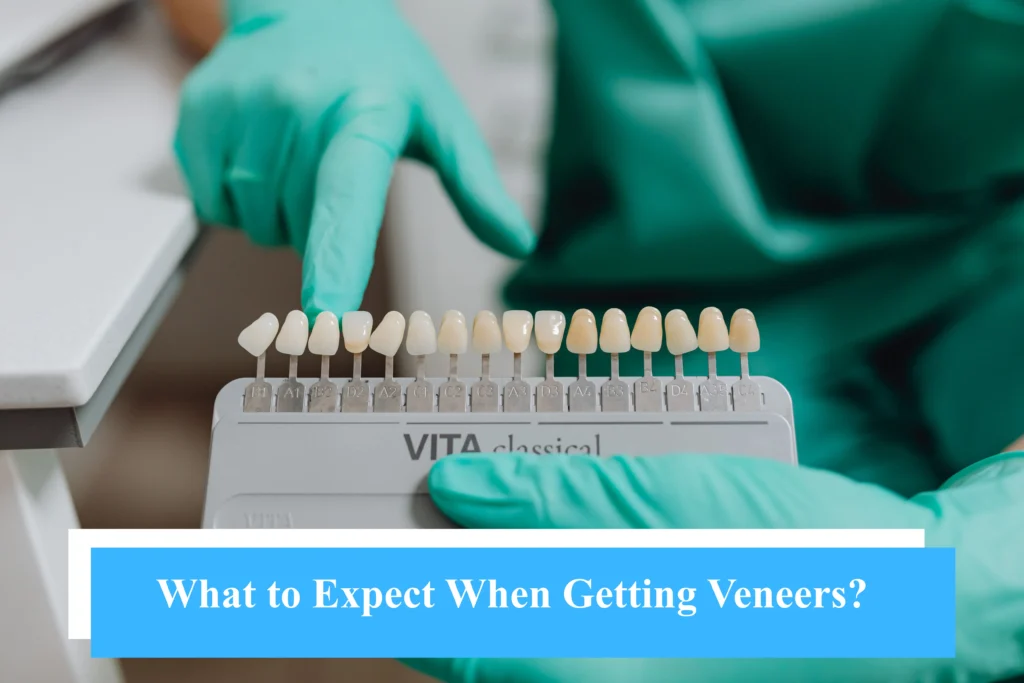
Planning the Shape, Shade, and Overall Smile
Once veneers are considered appropriate, the dentist will plan their size, contour, shade, and position. The goal is usually to create a result that looks balanced with your face, lips, gums, and neighboring teeth.
Some practices use digital smile design, photographs, mock-ups, or temporary trial restorations to help patients visualize the proposed outcome. This stage is a good time to discuss how white you want the veneers to be, whether you prefer a very uniform appearance or a more natural variation, and how many teeth may need treatment for a balanced result.
Do Teeth Need to Be Shaved for Veneers?
Many porcelain veneers require removal of a small amount of enamel from the front surface of the tooth so the restoration can fit naturally and not look bulky. The amount of preparation varies according to the type of veneer, the position and shape of the tooth, the desired result, and the dentist’s treatment plan.
Some cases may be suitable for minimal-preparation or no-preparation veneers, but these options are not appropriate for everyone. It is important to understand that when enamel is permanently removed, the procedure is generally irreversible and the tooth will usually continue to require a veneer or another restoration in the future.
What the Tooth Preparation Appointment Feels Like
Before tooth preparation, local anesthetic may be used to keep you comfortable, depending on how much enamel needs to be removed and your sensitivity. The dentist carefully shapes the surface of the tooth and may refine the edges to create space for the veneer.
After preparation, an impression or digital scan is taken so the laboratory can create the final veneers. The dentist will also record the planned shade and other design details. The appointment length depends on the number of teeth being treated and the complexity of the case.
Will You Get Temporary Veneers?
If porcelain veneers are being made by a dental laboratory, temporary veneers may be placed while you wait for the final restorations. Temporary veneers protect prepared teeth and give you an approximate idea of the final appearance.
They may feel slightly different from natural teeth and are usually not as strong, polished, or precisely fitted as the final veneers. Your dentist may advise avoiding very hard, sticky, or strongly colored foods during this stage. Temporary veneers can also provide useful feedback about tooth length, shape, speech, and comfort before the final restorations are bonded.
The Final Veneer Fitting
At the fitting appointment, the temporary veneers are removed if they were used. The dentist checks the fit, shape, shade, and contact between the veneers and neighboring teeth. You may be shown the veneers before final bonding so that the appearance can be reviewed.
Minor adjustments may be possible at this stage. Once both you and the dentist are satisfied, the teeth are cleaned and prepared for bonding. A dental adhesive and resin cement are used to attach the veneers to the tooth surfaces, and a curing light may be used to harden the bonding material. The dentist then removes excess cement and checks your bite.
Does Getting Veneers Hurt?
Most patients tolerate veneer treatment well, particularly when local anesthetic is used during tooth preparation. You may experience temporary sensitivity or mild gum soreness after the procedure. Prepared teeth can also feel more sensitive to hot and cold foods for a short period.
Significant or worsening pain is not something to ignore. Persistent sensitivity, pain when biting, gum swelling, or a veneer that feels loose or unusually high should be assessed by your dentist.
What to Expect During the First Few Days
New veneers can feel unfamiliar at first. The shape of the teeth, the position of the edges, and the way your tongue contacts the teeth may feel slightly different. Most people adjust quickly.
Your gums may be mildly irritated, especially if treatment was close to the gumline. Brushing gently, keeping the area clean, and following the dentist’s instructions can help. If your bite feels uneven after the numbness has worn off, contact the dental practice so it can be checked rather than trying to adapt to an uncomfortable bite.
How Long Do Veneers Last?
Veneers are durable restorations, but they do not last forever. Their lifespan varies with the veneer material, quality of bonding, bite forces, oral hygiene, habits, and regular dental care. Porcelain veneers often last many years when well maintained, while composite veneers may require repair or replacement sooner.
Even though porcelain does not decay, the natural tooth around and behind a veneer can still develop cavities. Gum recession can also expose the edge of a veneer over time.
How to Care for Veneers
Veneers should be cared for much like natural teeth. Brush twice daily with fluoride toothpaste, clean between your teeth every day, and attend dental checkups at the interval recommended by your dentist. Avoid using your teeth to open packaging, bite fingernails, or chew very hard objects.
If you grind or clench your teeth, your dentist may recommend a night guard to reduce stress on the veneers. Maintaining healthy gums is also important because inflamed or receding gums can affect the appearance of the veneer margins.
Foods and Habits to Be Careful With
You normally do not need an extremely restrictive diet after veneers have been permanently bonded, but reasonable care can reduce the risk of chips or fractures. Biting directly into very hard foods with veneered front teeth may place unnecessary force on the restorations.
Porcelain veneers are generally resistant to staining, although the natural teeth and bonding margins can still change over time. Composite veneers are more likely to stain and may need periodic polishing.
Potential Risks and Limitations
Before treatment, it is important to understand the limitations of veneers. Possible concerns include tooth sensitivity, chipping, fracture, debonding, changes in gum position, color mismatch as surrounding natural teeth age, and the future need for repair or replacement. Removing enamel also means the treatment may be irreversible.
Veneers are primarily cosmetic restorations and cannot solve every dental problem. Teeth with extensive damage, large fillings, severe misalignment, active disease, or structural weakness may require a different approach.
Questions to Ask Before Getting Veneers
Before committing to treatment, ask your dentist why veneers are recommended, what material will be used, how much enamel needs to be removed, whether the procedure is reversible, how many teeth should be treated, what the expected maintenance is, and what alternatives are available. You may also want to ask how your bite and tooth grinding habits will be managed and what happens if a veneer chips or needs replacement.
Final Thoughts
Getting veneers usually involves consultation, careful smile planning, tooth preparation when needed, temporary restorations in some cases, final fitting, and bonding. The result can be a significant cosmetic change, but veneers are a long-term dental commitment and should be planned with both appearance and oral health in mind. A detailed assessment by a qualified dentist is the best way to determine whether veneers are suitable for your teeth and what you should expect from the process.