
The answer is encouraging. Dental implants are designed to be a long-term solution, and in many cases, they can last for decades or even a lifetime. However, the lifespan of an implant depends on several factors, including how well it is cared for, lifestyle habits, and the different components involved in the implant system.
Understanding what lasts forever and what may need replacement over time helps patients make informed decisions and get the most value from their treatment.
Table of Contents
ToggleThe Long-Term Durability of Dental Implants
Dental implants are made to mimic the structure of natural teeth. Instead of resting on the gums like dentures or relying on neighboring teeth like bridges, implants are anchored directly into the jawbone. This strong foundation is what gives them their impressive durability.
Dental implants (the titanium post) can last a lifetime with excellent care, while the visible crown or prosthetic usually needs replacement every 10–20 years due to normal wear and tear, with success rates remaining high (90–95%) over 10–20 years. Proper oral hygiene (brushing, flossing), regular dental visits, and healthy lifestyle choices like avoiding smoking significantly influence their longevity.
This distinction is important. While the implant itself is designed to be permanent, the parts you see and use daily experience natural wear, just like natural teeth.
What Parts of a Dental Implant Wear Over Time?
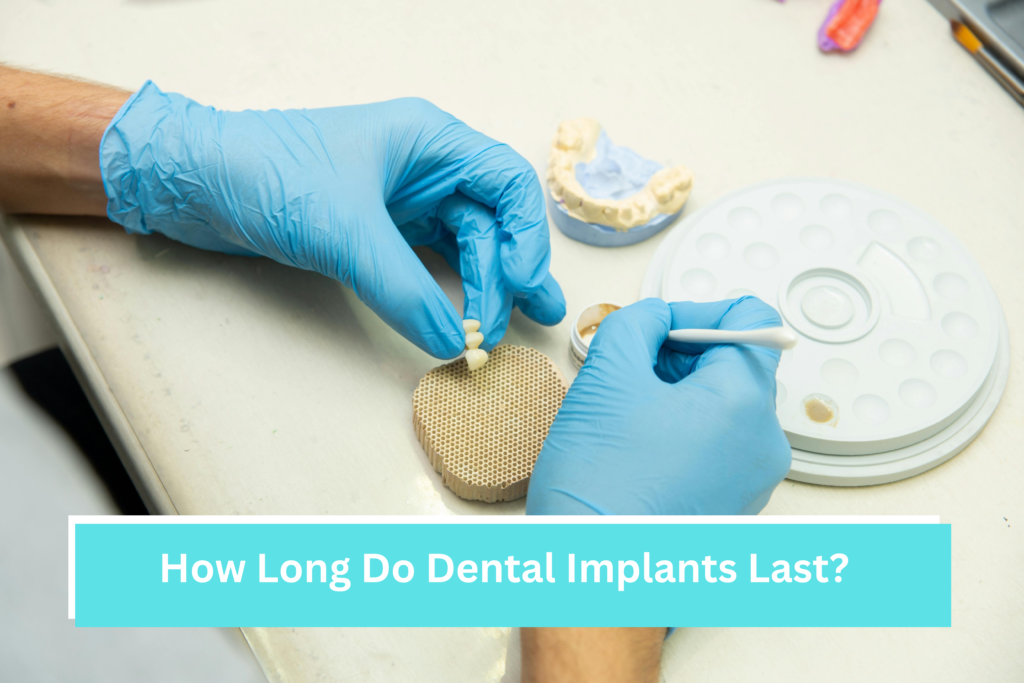
A dental implant is not a single piece. It consists of multiple components, each serving a specific purpose and each having its own expected lifespan.
The implant post, which is placed inside the jawbone, is made from titanium. This material is incredibly strong and biocompatible, meaning the body accepts it easily. Once the post integrates with the bone, it becomes extremely stable. With proper placement and good oral health, this part of the implant can last decades and often never needs to be replaced.
The visible tooth, known as the crown, is the part that does most of the work. It handles chewing, biting, and grinding every day. Because of this constant use, crowns typically last around 10 to 15 years. In many cases, with excellent care and gentle habits, they can last 20 years or more before needing replacement.
Supporting components such as the abutment and implant-supported dentures also have varying lifespans. Dentures attached to implants may need replacement or adjustment after several years due to changes in bite pressure or material wear. These replacements are normal and do not mean the implant has failed.
Why Some Dental Implants Last Longer Than Others
Not all dental implants last the same amount of time, and this usually has little to do with the implant itself. Instead, longevity is influenced by daily habits, oral care routines, and overall health.
One of the biggest factors is oral hygiene. Although implants cannot decay like natural teeth, the gums and bone around them can still become infected. Poor cleaning can lead to inflammation around the implant, which may eventually affect its stability. Brushing twice a day, flossing carefully around the implant, and attending regular dental checkups play a major role in keeping implants healthy long-term.
Lifestyle choices also make a significant difference. Smoking is one of the leading causes of implant complications because it reduces blood flow and slows healing. Patients who smoke are more likely to experience gum problems and bone loss around implants. Limiting or avoiding tobacco use greatly increases the chances of long-term success.
The skill and experience of the dentist or surgeon also matter. Proper implant placement ensures the implant is positioned correctly in the bone and aligned with the bite. Well-planned treatment reduces stress on the implant and helps it integrate successfully, which improves its lifespan.
Bite force and oral habits can also affect how long an implant lasts. Teeth grinding, clenching, or chewing on hard objects places extra pressure on the crown and supporting parts. Over time, this can cause wear or damage. Many patients who grind their teeth benefit from wearing a night guard to protect their implants while sleeping.
Health Conditions and Implant Longevity
General health plays an important role in how well dental implants perform over time. Conditions such as uncontrolled diabetes, weakened immune systems, or bone-related disorders can slow healing and increase the risk of complications. That does not mean implants are not an option, but it does mean extra care and proper medical management are necessary.
Maintaining a balanced diet, managing medical conditions, and following your dentist’s aftercare instructions all contribute to long-term implant success.
Are Dental Implants Really Permanent?
Dental implants are often described as a permanent tooth replacement, and for good reason. The implant post is designed to stay in place for life. However, it is important to understand that permanence does not mean nothing will ever need attention.
The crown is a replaceable part, and that is actually an advantage. If it becomes worn, chipped, or discolored, it can be replaced without disturbing the implant itself. This makes implants a flexible and long-lasting solution compared to other tooth replacement options.
How Dental Implants Compare to Other Options
When compared to bridges or dentures, dental implants typically last much longer. Traditional bridges may need replacement after several years and can affect neighboring teeth. Dentures often require adjustments or full replacement as the jawbone changes over time.
Implants, on the other hand, help preserve bone structure and provide stability that other options cannot. Over the long term, many patients find implants to be more cost-effective because they require fewer replacements and repairs.
Making Your Dental Implants Last as Long as Possible
Patients who enjoy the longest-lasting implants usually share similar habits. They maintain excellent oral hygiene, avoid harmful lifestyle choices, and stay consistent with dental visits. Addressing small issues early prevents larger problems later and helps protect both the implant and surrounding tissues.
With the right care, dental implants can continue functioning comfortably and naturally for many years, often for the rest of a person’s life.
Final Thoughts
So, how long do dental implants last? The answer depends on the part of the implant and how well it is cared for. The titanium implant post is built for long-term use and can last a lifetime. The visible crown or prosthetic typically lasts between 10 and 20 years and can be replaced as needed.
With proper oral hygiene, regular dental checkups, and healthy lifestyle choices, many patients enjoy their dental implants for 20 years or more. The combination of durability, comfort, and natural appearance makes dental implants one of the most reliable tooth replacement solutions available today.