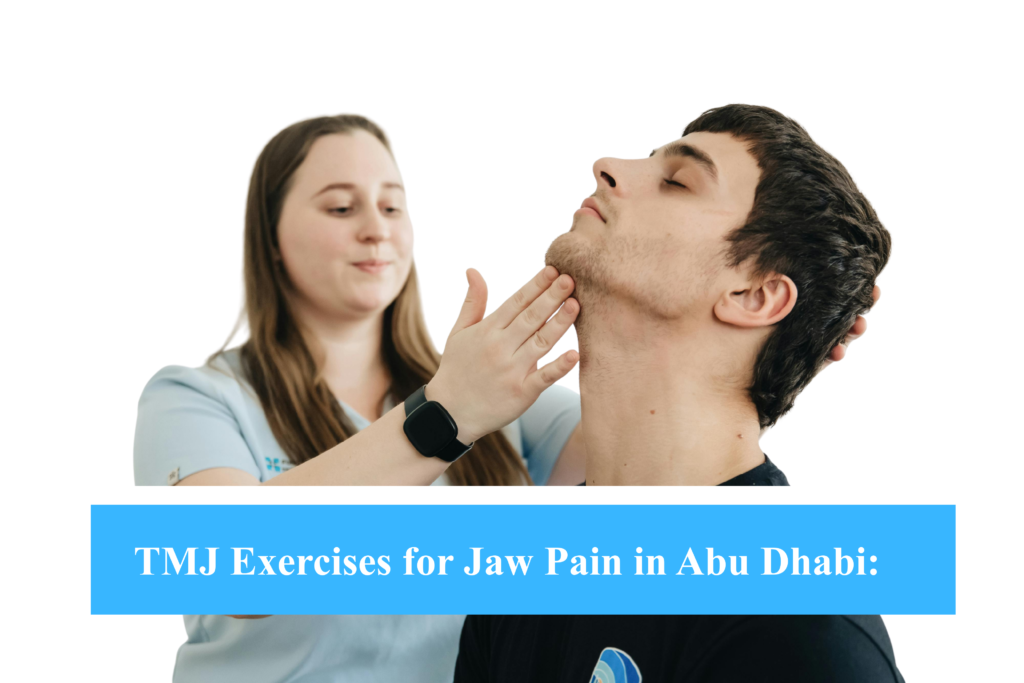
Jaw pain can make everyday activities like eating, speaking, and even smiling uncomfortable. Many people in Abu Dhabi experience jaw stiffness, clicking sounds, headaches, or facial tension without realizing these symptoms may be linked to TMJ disorders. Fortunately, targeted TMJ exercises for jaw pain can help reduce discomfort, improve jaw movement, and strengthen the muscles surrounding the jaw joint.
The temporomandibular joint (TMJ) connects your jawbone to your skull and plays a vital role in chewing, talking, and facial movement. When this joint becomes strained or inflamed, it can lead to temporomandibular joint disorder (TMD), causing persistent pain and limited jaw function.
Simple jaw exercises, combined with proper relaxation techniques, can often provide relief. Exercises such as chin tucks, tongue-to-roof-of-mouth movements, relaxed jaw opening, and resisted jaw exercises are designed to improve mobility, reduce tension, and restore normal jaw movement. When performed gently 3–5 times daily, many people begin noticing improvements within a few weeks.
In this guide, we’ll explore the best TMJ exercises for jaw pain relief, their benefits, tips for performing them safely, and when to seek professional TMJ treatment in Abu Dhabi.
Table of Contents
ToggleWhat Is TMJ Disorder?
The temporomandibular joint acts like a sliding hinge connecting your jaw to the skull. TMJ disorders occur when the muscles, ligaments, or jaw joints become irritated or misaligned.
TMJ disorders can affect people of all ages and are commonly associated with stress, teeth grinding, jaw clenching, arthritis, injury, or poor posture.
Common Symptoms of TMJ Disorders
People suffering from TMJ issues may experience:
- Jaw pain or tenderness
- Clicking or popping sounds while chewing
- Difficulty opening or closing the mouth
- Facial pain and tension
- Earaches or ringing in the ears
- Frequent headaches or migraines
- Neck and shoulder stiffness
- Locked jaw or reduced jaw movement
Ignoring these symptoms may worsen discomfort over time. Early intervention through exercises and professional care can help prevent long-term complications.
How TMJ Exercises Help Relieve Jaw Pain
TMJ exercises are designed to stretch, strengthen, and relax the jaw muscles. They help restore proper jaw alignment and improve movement without putting excessive pressure on the joint.
Benefits of TMJ Exercises
Regular jaw exercises may help:
- Reduce jaw stiffness and tension
- Improve range of motion
- Strengthen surrounding muscles
- Decrease inflammation
- Reduce headaches caused by jaw tension
- Improve posture affecting jaw alignment
- Prevent jaw locking and clicking
TMJ exercises, such as chin tucks, tongue-to-roof-of-mouth movements, and relaxed jaw opening, aim to reduce jaw pain, increase range of motion, and strengthen surrounding muscles. These exercises, combined with techniques like resting the tongue on the palate, help alleviate discomfort from jaw grinding and tension.
For best results, perform these exercises gently 3–5 times daily and remain consistent with your routine.
Best TMJ Exercises for Jaw Pain Relief
Chin Tucks
Chin tucks help improve posture and reduce tension in the neck and jaw muscles. Poor posture, especially from long hours using phones or computers, can contribute significantly to TMJ pain.
How to Perform Chin Tucks
- Sit or stand with a neutral posture
- Breathe in slowly
- As you breathe out, gently pull your head backward to create a “double chin” effect
- Hold for 5 seconds
- Repeat 5 times
This exercise relaxes the jaw and neck while improving alignment.
Rest Position / Tongue-Up Exercise
This simple relaxation exercise reduces pressure on the jaw joints and encourages proper tongue posture.
Steps
- Place the tip of your tongue on the roof of your mouth, just behind your front teeth
- Keep your teeth slightly apart
- Allow the jaw muscles to relax naturally
- Breathe slowly and deeply
This technique is especially helpful for people who clench their teeth due to stress.
Goldfish Exercise
The goldfish exercise improves jaw mobility and strengthens movement control.
How to Do It
- Place one index finger on the TMJ joint where your jaw hinges
- Place your other index finger on your chin
- Open your mouth halfway while applying gentle pressure
- Ensure the movement remains smooth and controlled
- Repeat several times
There are both partial-opening and full-opening variations depending on comfort level.
Resisted Mouth Opening and Closing
This exercise strengthens the jaw muscles without overloading the joint.
Resisted Opening
- Place your thumb underneath your chin
- Slowly open your mouth while applying light upward pressure with your thumb
- Hold briefly before closing your mouth
Resisted Closing
- Place your fingers on your lower front teeth
- Gently close your mouth while creating slight resistance with your fingers
These movements help build jaw stability and improve muscle control.
Side-to-Side Jaw Movement
This exercise improves jaw flexibility and mobility.
Steps
- Keep your mouth slightly open with teeth apart
- Slowly move your jaw from side to side
- Keep the motion smooth and controlled
- Repeat 5–10 times
Avoid forcing the movement if you feel discomfort.
Forward Jaw Movement
Forward jaw stretches help relax tight jaw muscles and improve movement coordination.
How to Perform
- Move your bottom jaw forward so the lower teeth sit in front of the upper teeth
- Hold for 10 seconds
- Slowly return to the starting position
- Repeat several times
This exercise stretches the jaw muscles and promotes flexibility.
Relaxed Jaw Opening Exercise
This movement encourages proper jaw opening mechanics while reducing tension.
Steps
- Place your tongue gently on the roof of your mouth
- Slowly open and close your mouth while maintaining relaxed muscles
- Avoid excessive opening
- Repeat gently several times daily
This exercise is highly effective for individuals experiencing jaw clicking or stiffness.
Important Tips for Performing TMJ Exercises Safely
Performing exercises correctly is essential for avoiding further strain on the jaw joint.
Go Slow
Avoid sudden or aggressive jaw movements. Slow and steady motions are far more effective and safer for the TMJ.
Use a Mirror
Practicing in front of a mirror helps ensure your jaw moves evenly without shifting to one side.
Stop if Pain Increases
Mild stretching discomfort may be normal, but sharp or severe pain is not. If any exercise worsens symptoms, stop immediately and seek professional advice.
Focus on Relaxation
Combining TMJ exercises with deep breathing and relaxation techniques can significantly reduce muscle tension and stress-related jaw clenching.
Stay Consistent
Consistency matters more than intensity. Gentle daily exercises often produce better long-term results than aggressive stretching.
Lifestyle Tips to Prevent TMJ Pain
In addition to exercises, lifestyle adjustments can help prevent recurring jaw discomfort.
Avoid Hard and Chewy Foods
Foods like gum, nuts, ice, and hard candies can place extra stress on the jaw joints.
Manage Stress
Stress often contributes to jaw clenching and teeth grinding. Meditation, breathing exercises, and regular physical activity may help reduce tension.
Improve Posture
Poor posture affects neck and jaw alignment. Keep your shoulders relaxed and avoid looking downward at screens for extended periods.
Apply Warm Compresses
Warm compresses can help relax tight muscles and improve blood circulation around the jaw area.
Get Enough Sleep
Quality sleep supports muscle recovery and reduces overall stress levels.
When to See a TMJ Specialist in Abu Dhabi
While exercises can provide relief for mild to moderate symptoms, persistent TMJ pain may require professional evaluation.
Signs You Should Seek Professional Treatment
- Severe jaw pain
- Jaw locking
- Difficulty chewing or speaking
- Chronic headaches
- Facial swelling
- Persistent clicking or popping sounds
- Pain lasting several weeks
A qualified TMJ specialist in Abu Dhabi can diagnose the root cause and recommend personalized treatment options.
TMJ Treatment Options Available in Abu Dhabi
Modern dental and rehabilitation clinics in Abu Dhabi offer several advanced TMJ treatment solutions.
Physical Therapy
Therapeutic exercises and manual therapy can help improve jaw mobility and reduce inflammation.
Night Guards and Splints
Custom-made dental appliances protect teeth from grinding and reduce pressure on the TMJ.
Botox for TMJ
Botox injections may help relax overactive jaw muscles and reduce clenching-related pain.
Orthodontic Treatment
In some cases, correcting bite alignment can help improve TMJ function.
Advanced Dental Evaluation
Digital imaging and comprehensive jaw assessments help specialists identify structural issues affecting the joint.
Why Early TMJ Treatment Matters
Ignoring TMJ symptoms can lead to worsening pain, chronic headaches, sleep issues, and difficulty eating. Early diagnosis and proper management improve recovery outcomes and help prevent long-term joint damage.
Combining professional care with at-home TMJ exercises often delivers the best results.
Frequently Asked Questions About TMJ Exercises
Can TMJ exercises permanently cure jaw pain?
TMJ exercises can significantly reduce symptoms and improve jaw function, but long-term relief depends on the underlying cause of the disorder.
How often should I do TMJ exercises?
Most exercises can be performed gently 3–5 times daily unless advised otherwise by a healthcare professional.
Are TMJ exercises safe to perform at home?
Yes, many TMJ exercises are safe when done correctly and gently. However, severe symptoms should always be evaluated by a specialist.
Can stress worsen TMJ pain?
Yes. Stress often causes jaw clenching and teeth grinding, which can increase TMJ discomfort.
How long does it take to see results?
Some individuals notice improvement within a few weeks of consistent exercise and lifestyle changes.
Final Thoughts
TMJ disorders can significantly affect daily comfort and quality of life, but the right exercises and habits can make a major difference. Simple techniques like chin tucks, tongue-up exercises, goldfish movements, and controlled jaw stretches help reduce tension, improve mobility, and strengthen the jaw muscles naturally.
If you are experiencing persistent jaw pain, clicking, headaches, or facial tension, seeking professional TMJ treatment in Abu Dhabi can help identify the underlying cause and provide long-term relief.
With a combination of targeted TMJ exercises, stress management, and expert care, many patients can regain comfortable jaw movement and reduce pain effectively.