
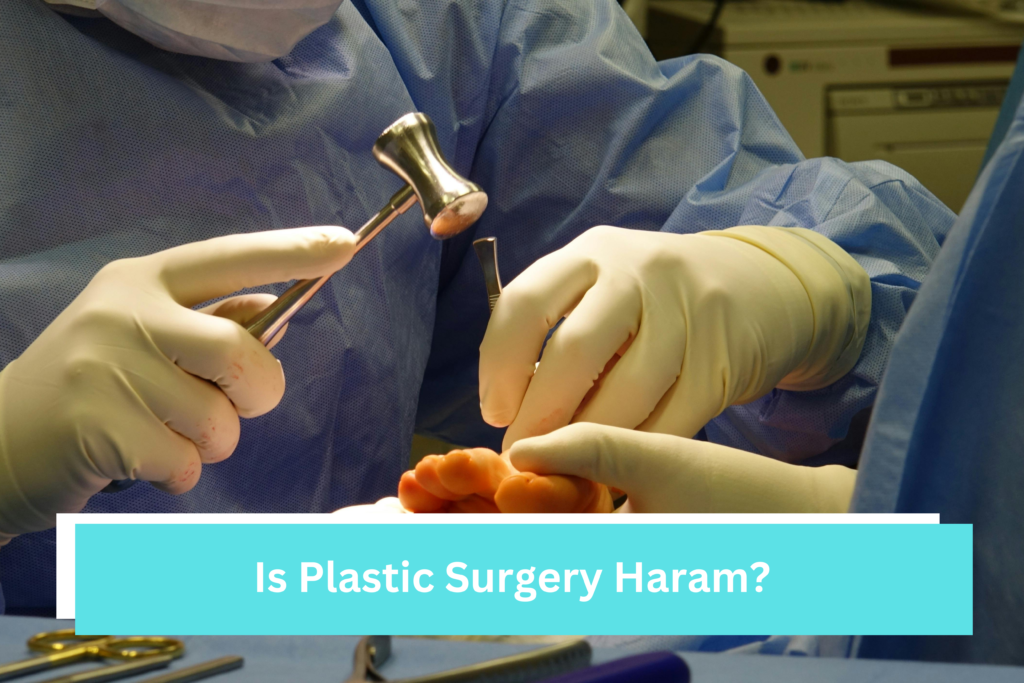
Plastic surgery is generally considered haram (forbidden) in Islam if done solely for vanity, altering Allah’s creation, or following trends. However, it is permissible (halal) to correct deformities, reconstruct damage from accidents, or treat functional issues, as these are seen as restoring dignity rather than changing creation.
To fully understand this issue, we must look at Islamic principles, scholarly opinions, and the intention behind the procedure.
Table of Contents
ToggleUnderstanding Plastic Surgery in Islam
Plastic surgery falls into two main categories:
- Reconstructive Surgery
- Cosmetic (Aesthetic) Surgery
Islamic rulings differ depending on which category the procedure falls into.
Islam does not reject medical treatment. In fact, seeking treatment is encouraged in Islam. The Prophet Muhammad ﷺ said, “Seek treatment, for Allah has not created a disease except that He has also created its cure.” (Hadith reported in Sunan Abu Dawood)
This shows that medical intervention itself is not haram. The issue arises when surgery is done for unnecessary alteration of one’s natural appearance.
When Is Plastic Surgery Permissible (Halal)?
Key considerations from Islamic jurisprudence include:
Permissible Situations
Surgery is generally allowed when it is performed to:
- Fix birth defects
- Reconstruct damage from burns or accidents
- Address severe physical or psychological distress
- Correct functional issues
Examples include:
- Repairing a cleft lip
- Reconstructive surgery after a car accident
- Correcting a deformity that causes social humiliation
- Procedures that improve breathing or vision problems
Islamic scholars agree that these situations are not about vanity. Instead, they are about restoring normal function and dignity.
In such cases, plastic surgery is not seen as changing Allah’s creation but rather correcting an abnormal condition. The principle in Islamic law states:
“Ad-darar yuzal” (Harm must be removed).
This foundational rule in Islamic jurisprudence allows medical treatment when it removes hardship or suffering.
When Is Plastic Surgery Haram?
Prohibited Situations (Haram) include:
- Face-lifts for anti-aging without medical need
- Lip fillers purely for beauty enhancement
- Changing facial features to match trends
- Altering natural body shape without necessity
These procedures are considered impermissible because they fall under changing the creation of Allah without a valid reason.
The Qur’an warns against altering Allah’s creation under the influence of vanity or deception. Scholars often reference Surah An-Nisa (4:119), where Shaytan says he will command people to change Allah’s creation.
Cosmetic surgery done purely to increase beauty, compete with others, or follow celebrity standards is considered rooted in ego and dissatisfaction with Allah’s design.
Islam promotes self-acceptance and gratitude rather than extreme physical modification.
Intent Matters in Islamic Rulings
Intent (niyyah) plays a central role in Islam.
Intent Matters: If the surgery is done to treat a disease, remove harm, or fix a defect, it is generally allowed.
But if it is done to:
- Show off wealth
- Imitate celebrities
- Gain attention
- Follow fashion trends
Then it becomes problematic or haram.
Islam evaluates actions not just by appearance, but by purpose. The Prophet Muhammad ﷺ said in a famous hadith reported in Sahih al-Bukhari:
“Actions are judged by intentions.”
Therefore, the same procedure may be halal in one case and haram in another, depending on the reason behind it.
The Difference Between Enhancement and Restoration
Islam makes a clear distinction between:
- Enhancement of normal features
- Restoration of damaged or abnormal features
Restoration is allowed.
Enhancement without necessity is generally prohibited.
For example:
- Reconstructing a nose damaged in an accident → Permissible
- Reshaping a healthy nose to look more fashionable → Haram
This distinction is crucial when asking, “Is plastic surgery haram?”
Psychological Distress and Surgery
One of the modern discussions among scholars involves severe psychological distress.
If a person experiences extreme mental suffering due to a noticeable deformity, scholars may allow corrective surgery. Islam does not ignore emotional harm.
However, minor dissatisfaction or low self-esteem caused by social media comparisons does not justify surgery. Islam encourages inner confidence and spiritual growth rather than physical perfection.
Modern Context: Plastic Surgery in Abu Dhabi and Muslim Societies
In cities like Abu Dhabi and other parts of the Middle East, cosmetic procedures have become increasingly common. Advanced medical facilities offer various aesthetic treatments, from fillers to full surgical transformations.
While the availability of these procedures has increased, Islamic rulings remain rooted in principles of moderation, necessity, and intention.
Muslims living in modern societies must carefully evaluate:
- Is the procedure medically necessary?
- Is there genuine harm involved?
- Is this about health or vanity?
- Am I dissatisfied with Allah’s creation?
Consulting a knowledgeable scholar along with a trusted medical professional is always recommended before making such decisions.
Scholarly Consensus
Most contemporary Islamic scholars agree on the following:
Plastic surgery is generally considered haram (forbidden) in Islam if done solely for vanity, altering Allah’s creation, or following trends. However, it is permissible (halal) to correct deformities, reconstruct damage from accidents, or treat functional issues, as these are seen as restoring dignity rather than changing creation.
The core principle is that Islam encourages moderation and permits medical intervention to remove harm (ad-darar yuzal), but prohibits actions rooted in ego or extreme vanity.
This balanced approach reflects the mercy and wisdom within Islamic law.
Common Questions About Plastic Surgery in Islam
Is Botox haram?
If used purely for cosmetic anti-aging purposes, many scholars consider it impermissible. If used for medical treatment (e.g., muscle disorders), it is allowed.
Is nose surgery (rhinoplasty) haram?
If correcting a deformity or breathing issue → Halal
If purely cosmetic → Generally Haram
Is breast reconstruction allowed?
After mastectomy due to cancer → Permissible
Purely for size enhancement → Usually Haram
Final Verdict: Is Plastic Surgery Haram?
The answer is not simply yes or no.
Plastic surgery becomes haram when:
- It is done for vanity
- It changes normal features unnecessarily
- It follows fashion trends
- It stems from dissatisfaction with Allah’s creation
Plastic surgery becomes halal when:
- It corrects deformities
- It restores normal function
- It removes physical or severe psychological harm
- It treats medical conditions
Islam is a religion of balance. It neither promotes self-harm nor supports extreme body modification.
Before undergoing any procedure, reflect deeply on your intention and consult qualified scholars.
Conclusion
So, is plastic surgery haram?
It depends on the purpose.
Islam allows medical treatment and restoration but discourages unnecessary alteration driven by ego or societal pressure. The principle of removing harm (ad-darar yuzal) guides Islamic rulings on this matter.
In today’s world — whether in Abu Dhabi or elsewhere — Muslims must approach cosmetic procedures with awareness, sincerity, and knowledge of Islamic guidance.
True beauty in Islam lies not in perfect facial features, but in character, faith, and gratitude toward Allah’s creation.